Showing posts with label mott the hoople. Show all posts

Thursday, March 22, 2012

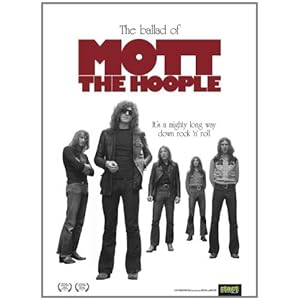
Ripple Theater - Ballad Of Mott The Hoople DVD


Against all odds, I've become a big fan of Mott The Hoople over the past few years. I always liked some of their songs but never bothered to explore their music in great depth because I never thought I'd really like it. I've never been a fan of Bob Dylan or the Rolling Stones and both of those artists are big parts of the Mott sound. They have an association with one of my all time least favorites, David Bowie. But for some reason I was drawn to them and started checking out their first few albums that were released on Island Records. Probably had something to do with the fact that I've always loved the Dictators version of Mott's "Moon Upstairs" on their live album Fuck 'Em If They Can't Take A Joke. The original version is on a great album called Brain Capers that's become a real favorite of mine. In 2009 I was a guest on the Ripple radio show and wound up talking a lot about the Mott reunion with Ripple friend Bob Vinyl and his cousin who went to England to see one of the shows. So when in 2011 it was announced that the Ballad Of Mott the Hoople documentary was being released on DVD I couldn't wait to check it out. It was a pain in the butt to actually find in a store but the incredible Vintage Vinyl in Fords, NJ had it in stock.

The story of Mott is pretty unique in the history of rock n roll. Named and molded by insane record producer Guy Stevens, Mott The Hoople recorded 4 albums for Island Records between 1969 and 1971. Guy was impressed when guitarist Mick Ralphs burst into his office demanding an audition after waiting around hanging around for a few days. Guy was even more impressed when they lugged a massive Hammond organ up a couple flights of stairs to play for him. My band practices on the 3rd floor of a walk up. I can verify that doing something like this requires a HUGE commitment to your art. They didn't have much commercial success but attracted a rabid following for their high energy stage shows. The band decided to break up but were encouraged by David Bowie to continue and he offered his services as producer and gave them their first hit "All The Young Dudes." Bowie's manager had Mott wear glammy clothes and they finally achieved success.

All of the band members are interviewed and their honesty is very refreshing. It was Mick Ralph's idea to go in a country rock direction on the album Wild Life and he says that he wound up apologizing to the band for this mistake (Mild Life is how they refer to it). Ian Hunter's especially blunt and delivers some great quotes. Roger Taylor of Queen talks about how they gave Mott a run for their money when they opened for them. Ian says "we never had any problem following them." Some of the band members talk about how once they became popular that Ian became the leader of the band and it was no longer a democracy. Hunter's reply is "the band was always a democracy. That was the problem." I also really like how the band all agreed that it was great that Bowie helped them out but they wanted to get out from his shadow immediately. They dumped Bowie's manager and declined working with him as a songwriter or producer. Turns out they were right. The follow up album to …Dudes simply titled Mott was a bigger hit and contained even better songs. I've always thought "All The Way From Memphis" was a much better song than "All The Young Dudes." Watching the live footage of the band in their prime (wish there was more of it) made me realize why I liked the band so much. Even in their glam clothes Mott The Hoople was a kick ass band. It's obvious they were all real rock n rollers and were very confident on stage but never resorted to Jagger-esque pantomime. Watching bassist Pete "Overend" Watts is hilarious. It's obvious Pete Way of UFO got a lot of inspiration from him and we all know Steve Harris of Iron Maiden patterned his onstage persona on Way.

This DVD should be required viewing for anyone in a rock band. When Mick Ralphs presents Ian Hunter with a bunch of songs that Ian feels he's not capable of singing, Ralphs departs to form Bad Company. There were probably some hard feelings at the time but both of them agree that it was the best thing to happen to each of them. Rather than compromise, they moved on and Ralphs works with Hunter off and on to this very day. Replacement guitarist Ariel Bender is also honest in the fact that he rejuvenated the band on stage but fell short in the studio when it came time to write material. The DVD ends when Hunter departs on his solo career with Mick Ronson. The rest of the band got in some new members and carried on simply as Mott but not much is mentioned about that here. There could easily be another documentary about that bands sad demise along with Ian Hunter's career ups and downs. If you don't know much about Mott The Hoople this documentary will be very enlightening and entertaining. Ian Hunter is touring again in 2012 and is playing right in my own neighborhood at the end of March. He's in his early 70's but word has it is still putting on great shows. For an even more Mott The Hoople madness, check out the new issue of Shindig Magazine for a massive article in the current issue with some killer photos.

--Woody

Wednesday, January 6, 2010

Lost Classic Gem - Widowmaker - S/T (1976)


Not having an older brother myself, I can tell you, musically speaking, the next best thing is having a best friend with an older brother.  And not just any older brother, mind you, but an infinitely cool one, with his varsity football letter, massive Spanish 'fro, and even more massive record collection.  It can't be understated how big of an impression my best friend's big bro had on me.  By the time I was in 6th or 7th grade, I already knew the names and could draw the logos of every seriously heavy '70's band like a pro. Whenever, Dan left for football practice -- or wherever it was that seriously cool big brothers went to -- Paul and I would sneak into his "way-off-limits" room and beeline right to his records, grab a stack of vinyl and sprint to their parents all-in-one wooden stereo console.  There, we'd rejoice for hours, soaking up the variety of musical treats that unfolded before us like some new and freshly discovered hard rock oasis.  I can still remember my heart racing wildly the first time Nazareth's "Hair of Dog" pounded out of the rickety speakers, followed by Night at the Opera, Tommy Bolin's Private Eyes and the seemingly endless John Bonham drum solo that was "Moby Dick."

But perhaps no other record in Danny's collection ever captured my musical imagination as much as the ghastly ugly,  white album-covered copy of Widowmaker's debut album, Widowmaker.  A super group of less than truly superstar composition, Widowmaker was the creation of Luther Grosvenor (Ariel Bender) upon his departure from Mott The Hoople, combined with an assortment of players from various U.K. acts, Bob Daisley (formerly of Mungo Jerry, soon to be of Ozzy Osbourne, Uriah Heap, Black Sabbath, and Rainbow fame), drummer Paul Nichols (Lindisfare), Hawkwind guitarist, Hugh Lloyd-Langton, and singer Steve Ellis, previously of the U.K. chart toppers, Love Affair.  Not a line-up that meant much to a 12 year old boy.  The band's name also failed to do justice to the band, not offering the slightest hint at the true sound of the music was that lay inside the vinyl grooves.  A note on the back of the album described a "widowmaker" as a powerful hydro-drill (which explains the bizarre photo of the band members all looking very uncomfortable next to what looks like a jack hammer, wrapped up in its chord).  But if the record label's intent in placing that note there was to get buyers to think that Widowmaker was a relentless assault of all that was heavy, that certainly was a total misrepresentation of the music they were supposed to be selling.  In truth, I think the record label had no idea what to do with this raggedy, raw hodgepodge of an album, and even less of an idea on how to sell it.

So it seems that nobody besides Danny had ever of it.


But, Oh God, what the world missed! With this ragtag collection of artists and musical backgrounds, it's no surprise that they'd each bring something different and unique to the table, and they certainly did.  Rather than being some monstrous metallic machine, as the name implied, Widowmaker was a loosely arranged collection of blues-based rocking, country tinges, folk flourishes, and even a smattering of acoustic funky gospel. Of course, all of this "creative differences" eventually led to the band's demise after their less interesting second album, Too Late to Cry, but in their scattered wreckage, they left us with one gloriously imperfect, loosely assembled collection of some of the '70's best unheard rock.

It doesn't take long to realize the brilliance here.  Daisley brings the same songwriting chops to this project that he'd later sue Ozzy for ignoring on the opening cut, "Such a Shame."  And what a gem this is!  Easily, this song gets my vote as one of the 10 best unheard songs of the seventies, bubbling out of the speakers on the back of one of the most perfect, undulating, percolating, bass heavy, distorted blues riffs of all time!  Sexy, sultry, powerful, and swaggering, it only takes one second into the opening to know that something intense is coming.  Daisely has fashioned such a compelling riff, played in twin speaker stereo by the two guitarists, and filled in solidly with Daisely's own bass, that I defy anyone who loves riff heavy rock not to get caught up in it's infinite groove.   Stuttering, stop-starting, under-mined by Nichols funkiest drumming, the song needs to be heard, needs to be felt to be appreciated.  Ellis has a soulful, if mildly shrill voice, and he digs deep into his gut to belt this one out, his voice beautifully ragged and leathered, to belt out the deepest emotion in Daisley's lyrics.  A true lost masterpiece and a tune I find nearly impossible to stop listening to.  I played this on Ripple Radio once to an audience as tough as the hardened musical mind, Bob Vinyl, and even he immediately fell under its spell.


Things change on a dime as the loose-strung acoustic guitar chords of Langston and the slide work of Bender trickle out of the speakers, bringing on the country-flavored, hippy leftover, "Pin a Rose on Me."  As tight and punchy as "Such a Shame" was, "Pin a Rose," is just as loose and languid.  If a rocker had bought this album on the strength of the name and the first track, right around here they'd be wondering what they'd gotten themselves into.  Fortunately, I didn't make that mistake.  The strength of the guitar work pulled me in, Ellis's emotive performance, held me, and then the frankly gorgeous melody and compelling harmony vocals locked me in place.  "On the Road," picks the pace back up, rummaging out as a gut-busting, amped up blues rock, hitting-the-road number.  Shades of Nazareth are apparent here, but there's so much more.  Listen for Daisely's bass flying up and down the neck between powerchords.  Dig into the dual guitar interplay at the mid-break.  This one is a floor-stomper of a song.

Then just as quickly, the boys change it up again, dropping down into the starkly gorgeous twin harmony guitar lead intro to "Straight Faced Fighter," a mournful, mid-tempo, off-blues excursion, that brings some stunning guitar work in amongst it's riding acoustic chords.  "Ain't Telling You Nothing," brings the raw bluesy swagger back full force, blaring out amongst big chugging chords and tempo changes.  Another barnburner here, raging in perfect 70's rock fury.   And that's just the first half of the album!

The boys are too contrarian to let things settle into any sort of predictability, and the album benefits (some may suffer) from it's ability to be staggeringly diverse.  "When I Met You," another one of my favorite tracks, begins with a shimmering, near psychedelic, neo-sitar sounding intro before it literally explodes into a rumbling barroom raver.  Widowmaker mined a rather unique tone to their big guitar parts, making them sound bluesy and flavorful, without necessarily sounding metallic or chunky.   This worked really well on the ballsier numbers like "When I met You."

What the earlier tracks did to throw a change-up at the face of blues-rock, "Shine A Light On Me," does to funkified gospel with unbridled success.  There's no way to avoid the groove in this baby.  The twin guitars mine an intensely fertile, pure smoldering funk vibe, completed by some beautiful Daisely bottom end.  A chorus of female gospel vocals make it abundantly clear what we're listening to here, and man, does it work.  Those heavenly angels singing their hearts off, punctuated by the glory of that massive funky riff.  Beautiful.  Then, about 2 minutes in, when Ellis leaps into his vocal, some dynamite scratch guitar and a subtle time change in the drums drives the song into an overdrive of spiritual frenzy.  "Lord listen to me on this judgment day/ I need a little love, I need it right away."  You may hate gospel, but you'll love this!  Bender also pulls out his most mind-bending solo of the album midway through, with beautiful tone and mouth-watering sustain.


"Running Free," is a perfectly done folk-rocker that rolls along much harder than that description might evoke.  Again, the boys lock into a riffmaniac bluesy groove that totally charges throughout the song, seeming to gain momentum and power as it rocks on, like some blues locomotive running headlong down the tracks. Gentle acoustic reign through the chorus, before the rampaging kicks in again.  Simple, yet effective.  Tight, yet remarkably loose.  Another standout track on this criminally overlooked album.

No album as deliberately diverse as this hits it all the time.  While I find tremendous charm in the single take, acoustic blues, disintegrating into a rumble of voices, laughter, burping, and toilet flushing that is the gospel-tinged "Got a Dream," "Leave the Kids Alone," is a little too intentionally hippyish and coy for its own good.  But even then, the songs add to the unpredictability and originality of what the guys were aiming for.

Do yourself a favor and pick up a copy of this one. It really is way too good to remain unheard.  A true top 10 all-time, lost classic!  The original vinyl might be a bit dicey to uncover, but in 2002, Castle Music re-issued Widowmaker as  a 2 CD-set combined with Too Late to Cry, 6 live tracks and some rare, unreleased material, called Straight Faced Fighters.  Last I checked, this disc set can still be found on Amazon and it's well worth the time to track it down.  I picked it up to hear the live cuts alone, even though I already had the original Widowmaker and Too Late to Cry on vinyl, still shining as bright as the day I first bought them, so many years ago.

Yes, I still have my original release vinyl.  Well worn and certainly well-loved.  And for that, it's long overdue that I say thanks to Danny, the coolest older brother I never had.

--Racer

Buy here: Straight Faced Fighters

http://www.bobdaisley.com