Showing posts with label record review. Show all posts

Monday, March 26, 2012

Enslaved - Isa

I had a dream. Not quite what the good Dr. Martin Luther King, Jr. had in mind, I’m sure . . . but a dream nonetheless. This one, in particular, had me sitting in a wooden box positioned in the middle of a frozen lake. With nothing but a case of beer and my thoughts as my companions, I was alone in the middle of a frozen wasteland . . . alone. Then there was a knock at the door of my hut of solitude. Unnerving, to say the least, for who knew I was here . . . and how did anyone get out here? The door slowly opened and five long haired and imposing figures, draped in practically nothing, stood in the ice encrusted doorway and with one simple statement claimed, ‘It’s time.’

I awoke from my deep sleep and, rather than incur the wrath of these wraiths sent by Morpheus, I pushed play on my iPod (no sense incurring the wrath of the wife either . . . it was two o’clock in the morning) and, as if by the hands of fate, Enslaved’s Isa began its musical transcendence.

Released in 2004, Isa was the much anticipated follow up to one of my all-time favorite records, Below the Lights . . . an album that I once referred to as the musical equivalent of ice fishing, something not meant for everybody, but for those into such things, a short moment in time of sheer bliss. Blistering extreme metal that originated from a black metal core and wound up becoming one of the more intriguing progressive metallic sounds around, and Isa took that Below the Lights blueprint and propelled it through the stratosphere. To say that Isa was a grand leap in direction and sound for Enslaved would be a massive understatement. But, then again, there’s that unique back step that the band takes with their sound . . . incorporating a little of that 70’s prog-rock into their sound, as well. Isa is a fascinating amalgam of, then, current extreme metal mixed with the sounds of yesterday to create a sound all unto its own.

 This album starts off in sheer creepy fashion with the absolutely chilling “Intro: Green Reflection”. Put this song on while walking through a forest and you’ll be shitting ice cubes. If that doesn’t work, wait a few seconds because when “Lunar Force” drops in, the pulse rate will increase. Horrifying demonic vocal screeching complemented by a wall of guitars and wrecking ball of rhythms fill every crevice of space of sound, but this is where I first recognized that this wasn’t the black metal that I thought it was going to be. The guitars don’t have that piercing or grating quality that traditional black metal has. These guitars are cold and icy, but enveloping like an early morning frozen fog. The ambience that the music creates has a sinister organic vibe to it . . . almost like turning over a rock and seeing the creepy crawlies writhing over one another. Then the band takes a massive left turn and gets mighty progressive on us . . . instead of a wall of sound, Enslaved serve up a staccato guitar riff over an off time and complex rhythm. Listen close and absorb the brilliance of the musicianship as all of the players are meshed around each other with their performances, shifting from standard 4/4 to some wild double and triple time rhythms . . . and then feel it as the song begins to build with more and more tension . . . creeping along the forest floor, rummaging for sustenance, and then getting supremely psychedelic before exploding into the main theme again. This song gets better and better with every listen!

Follow that up with “Isa” and the musical journey through the heart of darkness continues. Heavy ass guitars and rhythms again pummel the listener, and the vocals of longtime vocal/bass stalwart, Grutle, assail us with so much venom and piss and bile that you can’t help but feel your skin crawl. But here’s the new wrinkle . . . Enslaved incorporate clean-ish vocal harmonies that further add a discordant chill to the music as they work in contrast to the hellish belch of Grutle. Hehe . . . the Hellish Belt of Grutle . . . my new band name. Keep trudging over the decaying leaves of the haunted forest and hear how the band drops in a little keyboard flourish to add another sinister element to the overall sound. Great use of instrumentation and composition to create a world of fantastic dimension!

For you fans of intricate patterns within music, “Ascension”, especially the first two minutes or so, will call for your love. And again, Enslaved inject clean vocals that add heft and weight to the already burdensome sounds of the band . . . not the type of weight that we dread trudging along with, but the kind of weight that actually feels welcome, gives us substance and the air of accomplishment. Sprawling and magnificent, this song is that song that takes us from wandering around the forest floor and puts us on the back of a soaring eagle, diving though the clouds, hugging the mountainous terrain as we ride the air currents that Mother Nature blows our way.

Something else to consider on Isa is that this is the first time that I really recognize the use of keyboards in the band’s sound. There were some on Below the Lights, but it seems that Enslaved made better use of them on Isa . . . or this album was better produced to better capture the keyboard sounds. I can only think that this is one of the reasons I find this album as compelling as I do. The added depth with the keyboard sounds mixed with the already established traditional metal sound creates a world of intrigue that always makes the music interesting, even if I’ve heard it a million times before.

The entire work of Isa is a fantastic voyage. “Bounded By Allegiance”, “Return To Yggdrasill”, and the near 12-minute epic, “Neogenesis” are further examples of the musical growth that Enslaved has shown over the course of their lengthy career. Where Below the Lights was a dark album with a constant flitting and flickering ray of light to guide us, Isa is a harsh and cold landscape that is showing a little color of Spring breaking through the winter frost. The musicianship throughout this album is top notch and always surprises. Extreme metal, indeed, but I love how the band starts to work in simple little elements of vocal harmony and haunting melody to greater effect. Still a band that won’t appeal to the masses or be everybody’s cup of tea, thankfully . . . sometimes, I don’t like to share . . . a little 70’s rock influence, a heavy dose of nuvo-prog, and a mean streak of extreme metal . . . Enslaved, a band that pays homage to their influences, but refuses to get pigeon-holed into one genre and continuously pushes the envelope on creative expression.

I’m going back to sleep now . . . hopefully I won’t have any more spectral visitors and can get some much needed rest!

Pope

www.enslaved.no


Monday, March 19, 2012

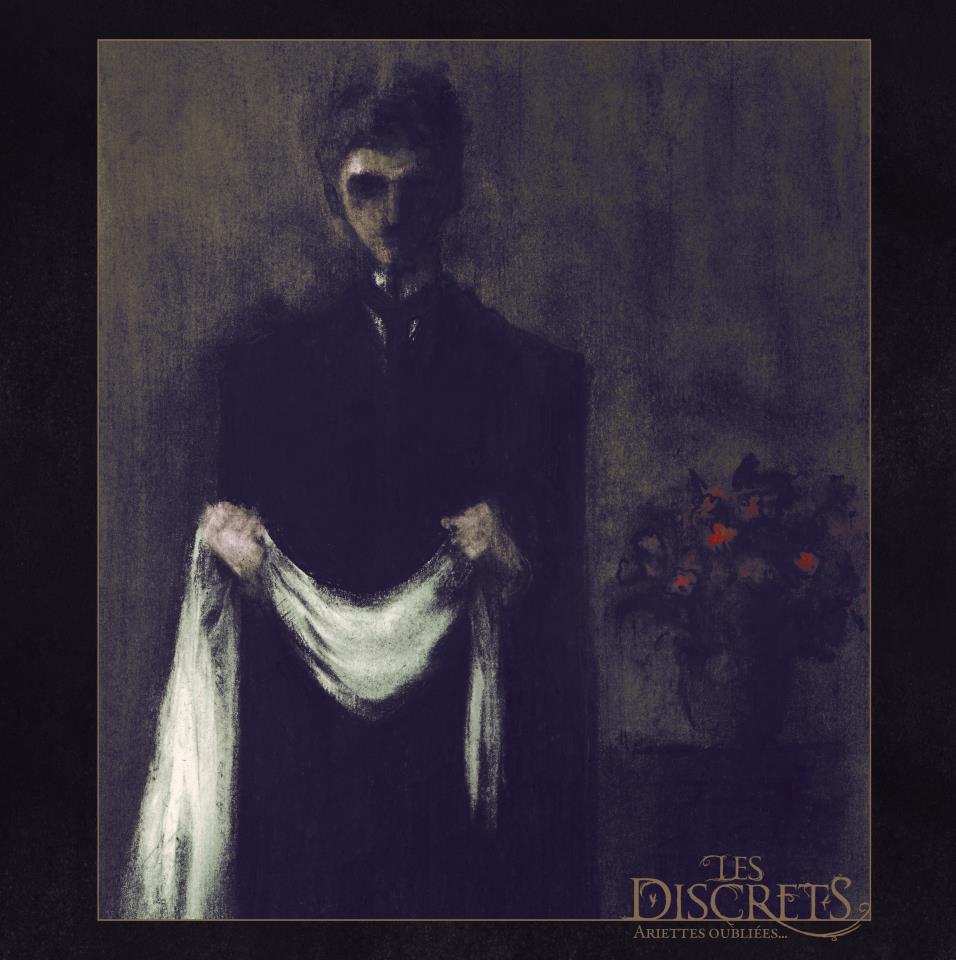
Les Discrets – Ariettes Oubliees . . .

 
I have no idea what to say about this album.

I think it’s brilliant. I think the soundscapes that Fursy Teyssier has created are wondrous and majestic. I think that the contributions of vocalist Audrey Hadorn are immaculate in their beauty. I think that the complexities of the musical movements are intriguing and dynamic. I think the tones are dark and foreboding. I think that Ariettes Oubliees . . . is a fantastic musical experience that begs for me to listen again and again, and at ever increasing volume. And, I think that I’m going a little mad trying to formulate a cohesive set of thoughts about this record!

The album opener is an instrumental track called “Linceul d'hiver” that is simply a beautiful, slow building mini epic. Teyssier does a great job of not rushing this song. It builds measure by measure, each measure adding a new musical element, filling all of the open space with sound, until we’re left with this densely intense wall of sound. Then, it vanishes and begins to fade away, only to drop immediately into “La Traversée” and then we, the listeners, are introduced to the dual vocal harmonies of Teyssier and Hadorn, each voice complimenting the other over a passage of strumming guitars, droning in a shoegazers fantastic voyage. Gloriously dynamic and epic, this song changes pace about three minutes in and gets a little darker, a little moodier, a little more distorted around the edges and heavier. Though the song ventures into some progressive territories, it always retains some beautiful melodies, both in the way of the haunting strains of the guitars notes and in the vocals. The song even flirts with a little heavy metal moment around the six minute mark as a well produced and captured guitar tone, distorted to the point it vibrates the teeth, but not so much that it rattles the head. The first ten-plus minutes of this album was enough for me to recognize that this was going to be a different experience than I had with the band’s first album, my beloved album of 2010, Septembre et Ses Dernières Pensées. A different experience, but maybe one that was more satisfying!

The beauty doesn’t end there. “Le Mouvement perpetual” is another 7 minute track that captures Teyssier and Hadorn feeding off each other in their elegant fashion. When I hear this song, I can almost picture the images from the album cover (vinyl edition . . . beautiful gatefold jacket . . . bonus poster . . . quality work) coming to life. Skeletal images dressed in their finest evening attire, elegantly dancing a discordant waltz across the parquet floors of a ballroom, draped in dark curtains, lit by the soft light of a meager amount of candles, and led by a dark and somewhat sinister band . . . the voices of Teyssier and Hadorn actually have a dancing quality to them, in the way they work together, breathe together . . . entwined in the rhythms of the music. Darkly romantic, almost gothic. What an amazingly emotional song!

The entire album does this . . . get’s the imagination flowing, tickling the emotions, and flooding the soul with music that moves. For over forty-two minutes, Les Discrets regale the listener this delicate sound that still has some heft to it. The pop-tinged “La nuit muette” features a huge vocal performance, layered voices that soar and never come back down. The acoustic guitar-based “Après l' Ombre”, also featured on the Prophecy Productions compilation album, Whom The Moon A Nightsong Sings, with all of its haunting tones and darkened chords, and tortured vocal melodies. “Les Regrets”, in all of its instrumental glory, with its ultra-somber, almost depressive air . . . Ariettes Oubliees is an amazing trip into the darkest recesses of the emotions and human psyche.

On the first listen, I was concerned that Ariettes Oubliees . . . wouldn’t match up or live up to my expectations based on my past experience with Septembre et Ses Dernières Pensées, and like all things new, it almost didn’t. But, I continued listening, working to separate my memories of the previous record from the sounds I was currently listening to, and I found an equally satisfying record. Top 10 Album of the Year? I can’t answer that, for the year is young and there are a lot of records coming out this year. But, I can say that I will probably be playing this disc, like I did the last one . . . in between every other release that comes out. Great work and highly recommended!

Pope

www.lesdiscrets.com
www.prophecyproductions.de


Monday, March 7, 2011

Mark-Almond – S/T


It’s Sunday night, a mug of java at my side, a computer open before me and a seemingly endless litany of paperwork to take care of.  Not complaining mind you, just setting the mood.  For tonight, I need something smooth, something organic, but warm with soul and texture.  I peruse the massive stacks of vinyl that seem to take up nearly every square inch of my office, searching for that perfect sound. The perfect accompaniment to tonight’s plan.

My fingers flip through album after album.  Many, like Riot or Triumph are just too loud for tonight.  Some, like Nilsson, are too soft.  Some, like Kraftwerk, are just too processed.  I need something real.  Earthy.  Jazzy.  Something organic.

Then my fingers stumble upon this slightly scuffed, definitely ripped and tattered, dollar-bin find, and the moment crystallizes in awareness.

Mark-Almond is the one.

Not to be confused with Marc Almond, the former lead singer of Soft Cell, Mark-Almond featured two John Mayall’s Bluesbreakers alum, Jon Mark on guitar/vocals and Johnny Almond, on sax, flute and harmony vocals. Fleshed out by Tommy Eyre on piano, flute and guitar, and Rodger Sutton on Bass, Mark-Almond fashioned a respectable career for themselves across the Atlantic during the ‘70’s, but, as is so often the case, failed to translate that success Stateside.  And that’s simply too bad because Mark-Almond is a lost treasure, a long-forgotten masterpiece of jazzy-fusion, rock and soul.   If you like the jazzier textures of Van Morrison, or the songwriting depth of Al Stewart, or the sophisticated jazzy touch of Steely Dan, then this is something you need to check out.

Beginning with “The Ghetto,” they just don’t write em like this anymore.  Spartan piano and hushed, whispered vocals tread languidly over the gentle jazz beat.  But surely, it builds.  The piano picks up in tempo, the keys hit harder, and Jon Mark unleashes a full-on fury of understated, yet gospel-inflicted, soulful vocals.  Bring in a gorgeous, smoky sax solo, and some jazz-club-worthy stand up bass work and we’re really onto something.  There’s more soul in this one song than in a thousand “songs” produced by Timbaland or any other innocuous purveyor of dredge today.  Most importantly, Mark-Almond give the song plenty of time to breathe, to grow, to mature at its own pace.  Silence and the space between notes are just as important to the composition as are the notes themselves.  For my Sunday evening, it just couldn’t be any better.  Jazzy, soulful, and still a rock and roll heart. 

I was just reading in Classic Rock Magazine about Mick Taylor, the enigmatic guitarist who “dared” to leave the Stones, and how he got his start as a 17 year-old guitarist with John Mayall.  He praised Mayall's tutelage at turning him into a musician.  Before him, Mayall had Eric Clapton and Peter Green.  Somewhere along the way he had Mark and Almond.  Talk about a scout for talent!  Another master performer who’s success never really translated to the States, based on this album alone, I know I need to go back and explore more of Mayall’s catalog.

Just as “The Ghetto” ends, “The City” begins.  An eleven minute, thirty second, multi-part, latin-tinged, jazz epic.  Again, Mark’s vocals are understated, but perfect for the song.  This is about as close as a rock band can get to a smoky, underground jazz club flair.  The whole song just kinda saunters with an unrushed, sultry soul.  Almond’s sax is incredible here, like the sound of a man making love to the woman of his dreams.  It moans and purrs.  Meanwhile, the latin soul dances on, percolating with a rhumba beat.   When Sutton brings in his improvised bass solo, I’m in heaven.  Pour me a martini, let me stare at the woman in red at the end of the bar.  Let me pretend I’m cool.  Just for a moment, I'm cool.

Don’t go to Mark-Almond looking to rock out.  Some will undoubtedly find the album too slow, particularly if they’re using the Mayall’s Bluesbreakers as their jumping off point.  While there are blues in this album, it’s not a blues album.  Rather, Mark-Almond struts a smooth path of pure jazz, art rock fusion.  It's a prog album of it's own sort.   “Tramp and the Young Girl,” is a bass-led ballad of such authentic jazz that it could’ve been hidden on Roberta Flack’s amazing first album.

The multi-part suite “Love”, another 11 minute extended, jazz improvisation kicks off with some beautifully picked flamenco-styled guitar that quickly melts into a flute and guitar acoustic passage of near classical elegance.   Then, just when you think the song may be getting too precious, that bass-- that huge, slap-happy, stand-up bass-- comes trodding back home, leading us down the beat-jazz path once again.  Almond picks up the vibe sticks and lays down something that’d make Milt Jackson proud, while that bass just keeps on going on, and on.  Then the vocals come in.  Not understated this time.  Not hushed.  These are full-throated, and raw, painfully soulful, backed up by a killer sax.  We’re rocking this time.  Full on rock mode, but still carefully hidden in the context of jazz.  Amazing. 

Rock, jazz, and blues all melt together once the harmonica comes out and the song gets a bit dirty.  A bit funky.  This is a jam, my friends.  A clinic in musical dexterity from classical to jazz to rock to blues without ever losing itself up it’s own ass.  “Song for You,” brings on a slow-burning, gospel vibe to the slapped bass and emphatic vocal.  This is the most underground beat club cut on the album, nearly subversive in it’s intensity.

Perhaps not an album for every mood.  It certainly doesn’t “rock” in the classic sense.  But for my Sunday night, it simply couldn’t a been better.

--Racer

Buy here: Mark-Almond