Last year I reviewed Boogie Disease by The 44s, a tight Southern California blues band Read my review and you will see I was infected with the Boogie Disease and the illness is terminal.
The 44s have followed up Boogie Disease with Americana, a thirteen track album produced by blues guitarist extraordinaire (who also appears on many of the tracks) Kid Ramos. The band also brought in musician Ron Dziubla to play horns. Dziubla is a music savant having played with everyone from Duane Eddy to Ok Go.
Without a doubt Americana builds upon and exceeds Boogie Disease. Americana contains fantastic renditions of the legendary Willie Dixon’s You’ll Be Mine and bluesmaster Howlin’ Wolf’s Mr. Highway Man. The 44s’ interpretations may, in fact, surpass the original recordings. The remainder of the tracks were written by The 44s, except Hanging Tree and Pleading My Case which were written by The 44s and Kid Ramos.
Each track is raw, emotional, gritty and explosive. The original blues songs of The 44s and Kid Ramos are as compelling as those of the blues legends. The band and its sound are exacting. The torch of blues royalty burns in each phrase, verse, chorus and solo. A life of struggle and pain oozes from Johnny Main’s voice.
Americana is a well chosen mix of West Coast and Chicago blues with just a touch of rockabilly. On each track there is something down to earth and magical - Tex Nakamura knocking out a moving mouth harp solo, Kid Ramos shredding a slide guitar, Johnny Main’s pleading vocals. On the CD cover it says “A Stereophonic Collection Of Hits” and that’s not puffery. If you love the blues, or have that boogie disease, your collection will not be complete without Americana.
Okay, Johnny, Kid, Tex, Mike, J.R, and Ron, play it - I got the blues.
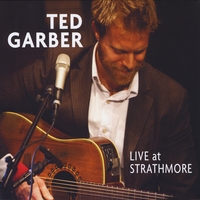
I’ve got the love/hate thing going on with today’s singer/songwriters. For me, it seems there’s a lot of something going on, but there’s really no substance. Almost like the soul has been sucked out of the songwriter. A lot of ego, a lot of faux sensitivity, a lot of rubbish. By today’s standards, it seems that a singer/songwriter simply needs to know how to or attempt to tap into their sensitive side. Ted Garber takes that standard and crushes it, bringing back the elements of the craft that have been forgotten . . . storytelling that contains vivid imagery, emotional conveyance, pure and honest integrity, and a touch of humor that reminds us that the guy singing is still human. Garber crafted a near perfect album with American Rail, capturing the soulful essence of each tale he told, and handing it over to the listener like a snapshot from every roadside haunt that he visited. Now, with Live at Strathmore, we get the opportunity to hear a brand new set of songs played by a group of world class musicians and the tales have never been more uplifting!
The Strathmore music program is one of those great programs that can enhance a musician’s songwriting abilities, but I’d rather spend time focusing on the end result . . . the music of Ted Garber. When I heard the rumblings across cyber space that this live album was being crafted, I naturally figured it was going to be a live recording of select tracks from American Rail with a few hidden surprises. What I got was actually the opposite . . . a live recording of hidden surprises and a single re-interpretation of one of American Rail’s gems. Bold, Mr. Garber. Very bold.
Opening with “Sunshine In Your Heart”, we get re-introduced to the soulful, Americana groove that Garber captured on his first release. It’s a little blues-y, very upbeat, and packed with a positive message about cutting the crud from our lives. In classic (yes, classic . . . it’s his fingerprint on the music) Ted Garber fashion, the man crafts lyrics in a way that’s reminiscent of someone like Jim Croce. Clever and witty, never clichéd, and always thoughtful, the lyrics are the strength of the man’s songs. Add that soulful voice and artistic integrity, and listening to Garber croon, you’ll think you’ve known the man all of your life. It’s a real voice, not something mechanized, orchestrated, or produced . . . a voice with such gravity that you can’t help but be pulled closer to it, to understand where this soul actually comes from.
“Plastic Bag” is the track that probably hits me the hardest on an emotional level. Introspective and powerful, Garber showcases that one doesn’t need a million notes and a million fancy words to convey a message. Stripped down and performed in a jazzier tone than most of his past material, “Plastic Bag” is the song I’ve been toting around of late as a constant reference that I gotta’ remember to check my own nasty baggage at the door if I want to live to my fullest, and I guess . . . you could say this review is a personal thanks to Ted Garber for arming me with yet another weapon on my war against self destruction. Yeah . . . it’s that strong of a tune. Don’t believe me? Buy the record.
For a good hour, Ted Garber entertains a sold out crowd with his fusion of soulful jazz meets blues-y troubadour songs, self described as BluesAmericanaRock. Who am I to disagree? “Achilles’ Heel”, “Sunshine In Fog”, and the heart-warming reinterpretation of “A Lot Like Me” (it’s deep . . . it’s in a fortune cookie) are prime examples of a singer/songwriter who has mastered that balance of tapping the vein of sensitivity without coming across as sappy and trite. Like Van Morrison or the aforementioned Jim Croce, Garber can write a hell of a love song and he sings these songs with a masculinity that gives them an immediacy and power that can’t be ignored. Plus, on this live edition, Garber’s between song banter is priceless and I found myself unapologetically laughing out loud.
“Third Time’s a Charm” features a duet with fellow Strathmore resident Chelsey Green and it’s one of those fun time, happy jazzy romantic songs that is so well crafted and performed that it’s an immediate attention getter. Garber and Green have a natural chemistry on this sultry groove, and the lyrics are so compelling that I find myself taking sides with both characters. Then the trumpet solo . . . sigh . . . it’s a thing of beauty, and by the songs final notes I want to jump to my feet and clap enthusiastically with those in attendance. And then . . . there’s “Don’t Want To Make A Baby, Baby”. Garber enlisted the aid of Philly rapper Jason Ager to pen this hip-hop tinged gem of a funky rocker. It’s an instant classic, filled with humorous and intelligent lyrics about getting down and doing the nasty. It would have been easy to write this one in a crass fashion, but hat’s off to Garber and Ager for injecting a level of class to the tune. Hell . . . the song is so funky that it makes me want to go out and practice my own technique!
While the songs are naturally the focal point of this performance, Ted Garber’s easy going and fun natured charisma adds an element of familiarity to the recording. You may have just met him, but you’ll think you’ve known him your entire life, and by the end of the performance, you’ll simply love the guy. These tracks are an open door to the intricate weave that makes up the tapestry of the man . . . bright and colorful, full of life, rich in humor, and deep with wisdom. If you don’t find yourself laughing, (maybe even crying), clapping, and cheering along throughout this outstanding set of genre jumping music, then you’re simply dead inside. Live at Strathmore is a slice of true Americana that absolutely can’t be missed!
It’s been quite the journey for Modern Day Moonshine over the past 6 months. Since releasing their third full-length album, Refuge, in November, the band has charted on various regional radio stations, placed on the Americana Music Association charts, were tapped to open for national touring act Brian Jordan in San Francisco, have been invited to perform a showcase for an advertising firm in the Bay Area, and now have become the featured act for this week’s Fresh Pork Chops radio program on KPIG-FM 107.5 in Santa Cruz.
During a massive AAA radio campaign that has highlighted tracks “Don’t Waste” and “Unsung” from the bands’ Refuge album, KPIG gravitated toward the album so much that for the next week at 7:00pm PST, the radio station will be airing tracks from the album.
Meanwhile, Modern Day Moonshine is working feverishly to hit the road to bring the album live to fans across the country! For those who can’t wait for more Modern Day Moonshine, join the bands Bootleggers Club and get the opportunity to hear unreleased, demos, brand new, and live tracks from their immense vault of material!
A friend of mine has an original drawing by Bruce Burton of “The Family Tree Of American Rock.” Here are a couple of photos of a poster made from the original drawing posted by Violator @ MuzicForums.com:
The tree is made up entirely of the names of American rockers and rock bands. Trailblazers, such as Chuck Berry and Elvis Presley, are deeply embedded in the tree’s trunk. Wilson Pickett, Otis Redding, ZZ Top, Beach Boys, James Gang and their ilk are relegated to branches and leaves. It is a heady drawing - a wonderful artistic tribute to the breadth, scope, and growth of rock music.
As I listened to Modern Day Moonshine’s release “Refuge” The Family Tree Of American Rock came to mind. The content of “Refuge” is as if Modern Day Moonshine (“MDM”) guitarist, vocalist and songwriter Todd Goodnough came upon the Family Tree and shook it as hard as he could. Leaves and twigs fell to the ground. Goodnough and his bandmates, bassplayer Brendan McCaskey and drummer David Burrows, then assembled a collage of twelve original tracks from the scattered debris. You have a branch of Crosby, Stills, Nash & Young; a bit of Bob Dylan bark; a slice of Dave Mason heartwood; a cone or two of the Doobie Brothers; a few stray needles of Allman Brothers; and some Atlanta Rhythm Section sapwood covered with “Champagne Jam.” There is even a leaf of Brahms from the nearby Family Tree Of Classical Music Composers.
MDM generally mine the Folk/Country/Alternative Rock genre. Yet, there is also a nice soul blues ethos. CSN&Y had a particular acoustic and electric guitar sound that was led by Neil Young and Steve Stills. Goodnough has much of the same approach in his guitar work. McCaskey thumps and bumps with precision and Burrows pounds out impeccable time with nicely played rolls and fills. The notes sound like the buds of spring. Each bursts into being and turns into a musical food factory. Tasty stuff!
Yes, MDM’s latest endeavor is under the Ripple label. True, The Ripple Effect is a Ripple enterprise. Also true, I don’t get paid to do this by Ripple or anyone else. If I didn’t like it you wouldn’t be hearing about it.
MDM’s music on “Refuge” definitely soars in the canopy of the The Family Tree Of American Rock. It won’t leave you out on a limb. I guarantee it!
John Wesley. There are times that we, as music fans, just stumble on moments of greatness and we really don’t know what else to say than just that. “Listen to this guy. He’s great!” We wish it was that easy to make some stop and listen to a piece of music that has had such a significant impact on our lives. We simply want to share important moments with others in the hope that those moments have a positive influence on the lives of others. And that’s where I’m coming from with John Wesley’s 2006 full length recording Live at Katie Fitzgerald’s. Not that the album has had some profound effect on my life . . . I did rescue a household of cats from a burning house while listening to it, no . . . it’s just one of those albums that I’ve found myself listening to and being moved to smile, laugh, cry, think. Music that has the power to move is worthy of note.
Fifteen tracks long, Live at Katie Fitzgerald’s is a stripped down performance of John Wesley alone with his soulful voice and his acoustic guitar . . . and a room full of patrons who I find myself envious of every time I listen to this disc. The first thing to know about John Wesley, if you’re not familiar with the man’s work, is that the guy can craft a tune! Even stripped of all of their studio trickery and exquisite performances by talented musicians, the songs have s richness and soul to them that makes them timeless and placeless. These are songs that can have an immediate impact regardless of where you or what you’re doing. A club full of drunken music fans? Absolutely. In your office, sifting through countless pounds of paperwork? Most certainly. Driving in your car with a group of friends for a night on the town? Yep. And once you’re done doing all that stuff, the songs will remain with you. The melodies, and the lyrics, and the overall vibe will creep back to you when you least expect it, years down the line, and will instantly remind you of where you were, what you were doing, and who you were doing it with. John Wesley has found the power!
Opening the live set with a track off of his most recent album at the time, Shiver, Wesley strums and croons his way through “Pretty Lives.” This song translates very well in the acoustic form. The rhythms are heavy, and with the aid of some technical effects that loop these rhythms, Wesley adds layers of elegant melody over the main riff. Throughout all of this, we’re regaled with a John’s incredible turn of phrase and ever so soulful voice. His ability to shift from rhythm to lead work is impressive, especially considering that he’s got to concentrate on the vocals at the same time. The dude is damn smooth, and his guitar solo on this track is filled with class and is thankfully devoid of superfluous notes. The lyrics echo in my head at many an odd time and I’ve even found myself using them in conversation, which illicit a few raised eyebrows . . . most people that I know recognize that I could never come up with words that conveyed an idea in such a unique fashion.
“Our Hero” is one of those songs that has the power to stop me dead in my day to day. The imagery that Wesley uses is so strong and I can feel the mass of people swirling around me as I stand in New York’s Time Square looking up at the giant Coca-Cola sign, feeling the bitter cold of the East Coast winter wind, and seeing a homeless guy sitting in the square with his memories as his lone companion. But none of these images would be possible if it weren’t for John’s passionate vocal performance. The lyrics are great, but without him singing those words the way that he does, conveying the thoughts in just that special way, those words are empty. This is one of those times that I get chills and feel my eyes moisten a bit. The art of storytelling has a great voice in John Wesley. Seriously. Put him next to Springsteen. Next to Dylan. Petty. Wesley shouldn’t be walking behind these guys. He should be arm locked with these legends, walking stride for stride.
While Wesley performs a few milder tunes in the set, he seems to get my attention the most when he shows his more aggressive side. And I don’t mean the aggressive, I’m-gonna-bust-you-in-the-mouth-type of aggressive, but more like he needs to get our attention and simply conversational tones just won’t do. “Waiting For The Sun To Shine” is a gritty and mean sounding song. The rhythms are heavy and even John’s lead playing has an edge to it. Hell, even his voice has a menacing edge to it . . . still smooth as a shot of Knob Creek, but he comes across as someone desperate. And we all know what desperate people are willing to do. Again, the lyrics provide a compelling tale and the combination of word and voice creates an exhilarating piece of ear candy.
As the album cruises through mellow portions, soulful pieces, and quieter moments, we can hear the wide variety of styles that John Wesley incorporates in his music. “Used Up,” “Ordinary Man,” and “Always Be” all shine, but I can’t help but to get excited when “The King of 17” makes its way to my eardrums. From the first time I heard it on the Shiver album, I fell in love with the track, and to hear it stripped down to the bare musical bones is a thing of marvel and wonder. The tale of a kid trying to follow his heart and the romance of being the sole provider and savior for his single love always puts a smile on my face. Ah, the naivety! It’s such a touching story sung from the protagonists perspective that every guy can relate to . . . regardless of how experienced we all were in the ways of life, we always thought that we were strong enough to carry the burdens of the world, strong enough to be a real man and deliver those we love from evil, to make the one’s we love forget the pain that they’ve endured. The reality of it is none of us are that strong, but the fact that we go out and try our best every time out has to amount for something.
John Wesley is a brilliant singer/ songwriter, conveyor of the Americana, storyteller, composer, performer . . . I can go on. Really. If you’re looking to “discover” the dude’s music, Live at Katie Fitzgerald’s is as good a place as any, mainly because it practically covers his entire discography and gives you a great idea of what the guy is all about. His studio material, as good as it is, tends to have a different feel to it in comparison to this live disc, the studio albums are full of rich texture and layers of sound. Kinda' like the difference between a painted portrait and a candid snapshot. Live at Katie Fitzgerald’s is a snapshot of how the studio albums became what they are, almost as if we’re being given a glimpse of the songwriting process, of the mindset of creating soulful music, and the power of a master songwriter standing naked before countless, scrutinizing eyes. - Pope JTE
Sometimes you hear a song that just hits that right note in your soul. Moves you to a place that you've been afraid to go to, or reluctant to remember. That's the power of a songwriter. The ability to make you feel, remember, experience something from deep inside. Little wonder then that when we learned that award-winning songwriter, Kevin Beadles was releasing a new album of beautiful, affecting rootsy americana, we jumped at the chance to have him come join us on the red leather interview couch and lend his thoughts on to what makes a song tick.
When I was a kid, growing up in a house with Cat Stevens, Neil Diamond, and Simon and Garfunkel, the first time I ever heard Kiss's "Detroit Rock City," it was a moment of musical epiphany. It was just so vicious, aggressive and mean. It changed the way I listened to music. I've had a few minor epiphanies since then, when you come across a band that just brings something new and revolutionary to your ears. What have been your musical epiphany moments?
About ten years ago, a recording engineer loaned me a copy of Lucinda Williams' Car Wheels on a Gravel Road. He had noticed that I sang and wrote in an affected style (much in keeping with the artists I grew up listening to such as David Bowie, Peter Gabriel, David Byrne). He thought Lucinda might shake me out of it and she did. What a marvel of singing and songwriting. Poetically stark, unflinching lyrics sung with a defiant vulnerability. There was a deceptive brilliance in the simplicity of the writing. She could twist a vowel in her mouth and run through two or three shades of emotion before the word was finished. Hearing her inspired me to seek greater honesty in my singing and songwriting.
Talk to us about the song-writing process for you. What comes first, the idea? A riff? The lyrics? How does it all fall into place?
All the above. Starting a song is usually the easy part, it's finishing where the work comes in. Sometimes I sit down to write a letter (full song) and find that all I have is just a postcard (maybe a verse or chorus). For me, writer's block isn't a lack of ideas, it's not knowing what to do with an idea. So if I'm stuck on one song, I just pick up another and see where it wants to go. And I keep doing that until it all falls in place. Sometimes it happens in one sitting and sometimes it takes years.
Where do you look for continuing inspiration? New ideas, new motivation?
Songwriting is just something I do. I don't worry about finding ideas; they seem to find me. In fact, I'm often distracted by whatever embryonic song is tumbling around in my head. Perhaps that's my way of processing life. But re-writing is where the real craft of songwriting comes in and that's where I need motivation to keep plugging away at a song, trying to realize its full potential, especially when it's stopped being fun. Here, my greatest resources are the West Coast Songwriters and my songwriting circle called Club Shred. Both are chock full of terrific tunesmiths who take vicious delight in tearing apart each other's babies. Their feedback is invaluable to me and hearing their new songs is a constant source of inspiration.
Genres are so misleading and such a way to pigeonhole bands. Without resorting to labels, how would you describe your music?
My music unites classic rock with the back porch drawl of gospel, blues and alt. country. It's roots music with plenty of branches. Picture Elvis Costello and Lucinda Williams getting in a faded blue '65 Ford pickup and driving across America writing songs about the strange thoughts and characters they meet along the way.
What is you musical intention? What are you trying to express or get your audience to feel?
I'm drawn to moments of transformation--that interval when a decision is made, an emotion discovered, or a life upended. There might be only a dozen decisions or events which make any significant difference to the overall arc of a person's experience. The rest is filler (the subject of "slice of life" songs) and the opportunity to reflect on decisions made or to be made.
In songwriting, how do you bring the song together? What do you look for in terms of complexity? Simplicity? Time changes?
I strive for simplicity but my default writing mode tends to be a little complex. My band consists of terrific jazz players who were looking for a rock project so that tells me I'm still relying on way too many chords, extensions, and key changes. If you listen to a song like "A Love Sublime," it just sounds like zany fun but it goes through three key changes, several shifts in feel, and a couple of chords I've never used before. Someday I hope to master 3-chord rock, which is by no means a pejorative term to my mind.
The business of music is a brutal place. Changes in technology have made it easier than ever for bands to get their music out, but harder than ever to make a living. What are your plans to move the band forward? How do you stay motivated in this brutal business?
Woody Allen was famously quoted as saying that 90% of success is showing up and I find that's absolutely true. You never know when or where you're going to make a fan or get a break. I entered a couple of rough mixes in two big songwriting competitions last year and ended up coming in second place in the rock category with each song. I get invited to play on a local NPR radio program and the next thing I know, Ripple Music is asking if I'd like to release a CD with them. I don't have a great overarching plan to conquer the world but I'm trying to write the perfect song and willing to share it with anyone who'll listen, and I'm finding there's an audience for my music. Any time I'm playing music, I'm doing something I love. To me, that's success on my own terms and I don't worry about the rest.
Come on, share with us a couple of your great, Spinal Tap, rock and roll moments?
In the late 80's/early 90's, I was singer-frontman for a band called mr. id. We got booked to play a Harvest Festival or something of the ilk that was broadcast on cable access TV in Antioch, CA. The stage was the flatbed trailer of a semi truck, for unfathomable reasons, I'm wearing bicycle shorts, and in the middle of our set, some guy pulls up in a little service vehicle and starts loading bales of hay on to the stage as we're playing. That was a painful video to watch.
Later, that same band got asked to open for Chris Isaak and we had to pass on the gig because our lead guitarist wasn't willing to cancel the fishing trip he had planned. That's when you know your band has just about reached its full potential.
What makes a great song?
COURAGE--no wait... that's what makes the muskrat guard his musk. A great song is one you can listen to a hundred times and still want to hear again. It's got to be unique (otherwise why listen to that particular song) but can't be gimmicky (even clever BS gets tiresome after a while). More importantly, it has to tap into an emotion you want to experience over and over. It speaks and you involuntarily answer "YES!"
Tell us about the first song you ever wrote?
Way too embarrassing...suffice to say, I was about eight years old, the title was "I'm a Fighter Pilot" and the melody bore a suspicious resemblance to "Jeremiah was a Bullfrog..."
What piece of your music are particularly proud of?
I entered five songs from the new CD in international songwriting competitions this past year and four of them won prizes. So, naturally, it's the one I like best that came up short. "You Can't Argue with Water" absolutely nails something I've wanted to express for a long time... the ephemeral nature of love. And I think that message is what makes the song problematic for some people. They want to hear that love is eternal and undeniable, which it certainly can be. But all too often, love is something beyond our control, it comes and goes, and no amount of whining will change that fact. Plus the song has one of my favorite lyric couplets, "She blew in out of nowhere and left without a trace/How could a summer thunderstorm leave lipstick on my face?"
Who today, writes great songs? Why?
Ryan Adams, Lucinda Williams, Lynn Smith, Steve Seskin, Bonnie Hayes and a thousand others. They each have a unique style and ability to get to the heart of an emotion. There are so many talented songwriters and most of them never get widely heard.
Vinyl, CD, or digital? What's your format of choice?
Ever since I bought an iPhone, I've been surprised how digital has taken over my listening. It's always with me... at the gym, on a bike, odd moments in the day. And it's great to have my entire catalog of unfinished musical bits and riffs on hand anytime I get inspired to work on something.
We, at the Ripple Effect, are constantly looking for new music. When we come to your town, what's the best record store to lose ourselves in?
I live in a college town (Berkeley) so there are a ton of used record stores nearby. Just walk a few blocks on Telegraph Ave and you're bound to find one you like.
Any final comments or thoughts you'd like to share with our readers, the waveriders?
I used to think that being in Liverpool put the Beatles at a major disadvantage compared to bands in London. Then I read how Liverpool was the major shipping port for the entire U.K. which meant that every kid in town, including the Beatles, knew someone who worked on a freighter and had cheap access to the latest records coming out of the U.S. At a time when rock music was only played a few hours a week on the BBC, this was quite an advantage.
I think it's great that music is so readily available today. In fact, it's so readily available that fantastic music can easily be overlooked or forgotten--that's why I love the concept behind Ripple and the waveriders. So thanks for sharing part of your Sunday with me, I hope you check out my music as well, and please feel free to contact me if anything moves you.
Riding the crest of some amazing singer-songwriters that we've reviewed here at the Ripple recently like Matt Pond and Cory Case, PJ Bond has crafted an album that literally defines the singer/songwriter genre. At times sassy and poppy, at others melancholic and sparse, You Didn't Know I was Alphabetical never fails to captivate and demonstrates a brilliant songsmith at the peak of his form.
PJ Bond, a New Jersey Native, has spent the majority of his days living out of his car, playing shows, crashing on couches and generally living the life of the true troubadour. Recorded sporadically in studios and various apartment bedrooms, Alphabetical is a stunning collection of songs each with a core-melting emotional resonance. Bond has the ability to make the mundane seem profound. To take the ordinary and make it emotionally resonating.
Alphabetical overflows with warmth and sincerity. It's a decidedly organic affair, graced with tones of acoustic guitar, the occasional slide, a gentle beat and a human heart. Bond throws a little bit of everything into the mix, from rustic, up tempo alt-country rockers to haunting, melancholy acoustic offerings and sweetly infectious indie numbers. Not since Cory Case's debut have I been this wrapped up in an album so seemingly simple, yet truthfully complex.
Bond has a straight-forward yet eloquent way with his lyrics, often finding that particular angle to make the lyric turn into a poem. On "You Too," the album's jaunty opener, Bond brings his own tone to a lyric of love. "I know I'll never be a fearless leader saving you/ and I think you know that too/ And I know I'll never sing the songs of love you want to hear/ but at least I sing for you." An honest, introspective glance at a man and his limitations, his failings, yet clear of his intent. That simple declaration touches me as a more honest and genuine statement of love than a thousand Lionel Richie ballads. The easy, repetitive nature of the verse bleeding into the chorus brings that song to life. A backyard porch letter of love, blowing through a summer sky.
"Stop Being Bad," reminds me of the best of Paul Westerberg in terms of tone and melody, compelling storytelling told simply, soberly, and never at a loss for a singable melody. "Skin and Bones," is haunting drug tale, sung to a person on the brink of death. Minor chord progressions and PJ's wavering tenor bring chills to my arms as the song proceeds. "And your corpse will be pristine/when they bury you indeed."
The album unfolds so casually it's deceptive. It flows so easy, it seems so relaxed, but that belies the assured confidence PJ has as a songwriter and performer. Stripped nearly naked on several tracks, PJ never falters, never hesitates to take us to his most tender humiliation "Well I know that I am barely scraping by/I can barely afford to pay my bills" (From "Grow your Smile Wide") and then twist that scenario on it's ear. An accomplished album, available on vinyl (white or blue). One I'll enjoy for years to come.
This is a strange review for me to write. Since our inception, Pope and I decided that our goal was to spread the word on all the great music that's getting missed, going unheard. With that as our goal, we wanted to create "ripples" and hope that maybe some of those ripples would turn into waves for the bands. You, oh fearless reader, are of course, the waverider.
With that mission firmly in mind, it's clear that most of our reviews are ravenously glowing. Some people have taken us to task for this, insinuating that we're unwilling to write a negative review, but they clearly can't wrap their feeble minds around the goal of the Ripple. How could we write a negative review about something we like? We write about what we like, get it?
Having said all that, I'm still left with Minor Kingdom's latest release, My Back Will Bend and I don't know quite what to do.
Minor Kingdom is a man, not a band, the stage name for Kristian Melom, a singer/songwriter from Minneapolis. And in true wandering minstrel fashion, his songs of loss and melancholy were recorded in various bedrooms, living rooms, and basements. I'm sure many couches were slept on as well, probably some quarters bummed and some laundry rooms utilized. Kristian's music is sparse and haunting, drenched in the melancholy of a Depression-era, post-dust bowl haze. Each song is like a dense country-gothic American painting, bereft of color; each scene washed in greys and dark ink washes. Occasionally, a hint of light peaks through, but the clouds are always soon to return.
So why is this review so difficult to write, you may ask? Mainly, because after 10 or so listens, I'm still totally unclear on how I feel about this album. Let's talk about my ambivalence first. While individually each song resonates strongly within its own claustrophobic cell of downhearted emptiness, as a whole, the album suffers from the relentless pace, or lack thereof. Each song crawls along at a whisper's tone, some barely reflecting a heartbeat at all. As such, for me, it's hard to get through the entire album in one listen without my mind wandering and my fingers tapping impatiently, waiting for that one big climax. That one moment of tension building and release. In a nutshell, the album is just too slow for me to get totally behind it.
Then why is My Back Will Bend appearing in the Ripple? Because there's something undeniably compelling going on here. It may not be in the album as a whole, but it's there, in the songs. In each individual song. And the more I play this album, the more it ingrains into my consciousness them more indispensable some of those songs become.
The lead-off title track simply doesn't do it for me. So slow in it's monotonous intent that I was tempted to dump the album right there. It wasn't a pretty sight, seeing me running around the room in a tizzy screaming for some speed metal or something with a pulse. But then before the funny men in the white coats caught me, "Choir of the Lillies" came on and my entire view changed. Sure, "Choir" still crawls along in a near-fugue state, starting with a spartanly strummed acoustic guitar and Kristian's haunting, near-whispered monotone voice. But then something happens. Haley Bonar's angelic harmonies join in, gently lifting the song to a place of real resonance. A sweeping, mournful cello floats by, underneath the harmonies, taking the song into some American Gothic den of despair. Gentle tones of electric guitar enter, hinting at a light just beyond the horizon. A healing in the distance. A fullness for the heart. Without a doubt, "Choir of the Lillies" is about as stark and moving a song as I've heard in a while. This song alone shows me that we're dealing with a man capable of creating something truly great.
"Brita's Song,"which follows is a touch lighter, but again too slow. There's no denying the craft here, but after the stunning revelation that was "Choir" I needed something new, something more dynamic. Fortunately, Kristian delivers again with the next cut, "Perfect." With the addition of some well-placed drums, a stark snare, and an ominous bass, a new energy emerges. The song slithers and slinks, like a snake coiling for the strike. From there the album continues in an alternating form between songs that are compelling or those that are simply too slow. In the end, there's nothing wrong with any individual track, in fact, individually each song can be emotionally riveting, but the sum of them all creates an album that's nearly moribund. Just begging for some CPR and some good mouth-to-mouth resuscitation.
Still, whenever I was about to give up on the album, I'd play "Choir of the Lillies" again, and once again I was enraptured. Kristian has talent, there's no doubt, and the skill to back it up. He just needs to vary the pace a bit, toss some life into his despondency. Then, he'll really have something.
In the meantime, I'll keep playing "Choir of the Lillies" and wait for Minor Kingdom's next album. It just may be the best album I've ever heard.
When The Pope and I first heard the incredible new album "Westering Again," by Old Californio, we were speachless. Literally. I was on the road that day and we were on speaker phone, and neither one of us could dream of the words to capture the simple, dusty beauty of that gem. Finally Pope said, "It's like you're in the mountains above the desert, and you're walking on a dusty trial, and the sun is high in the sky, and the world is expansive. Imagine that's music."
Yep, I agree. So it was our true joy to have Old Californio's scribe, Rich Dembowski come join us on the Ripple red leather interview couch and spread his views on music.
When I was a kid, growing up in a house with Cat Stevens, Neil Diamond, and Simon and Garfunkle, the first time I ever heard Kiss's "Detroit Rock City," it was a moment of musical epiphany. It was just so vicious, aggressive and mean. It changed the way I listened to music. I've had a few minor epiphany's since then, when you come across a band that just brings something new and revolutionary to your ears.What have been your musical epiphany moments?
Rich Dembowski: When I was a kid my mom would take me to Catholic mass, the congregation would sing hymns and my mom would join in. I remember being overwhelmed with the power of all these voices – my mom’s especially. To hear her sing so powerfully and forcefully left an indelible impression on me. At home my parent’s record collection was mainly big band, so I became aware of jazz, Duke Ellington especially, early on. To this day Duke Ellington’s "Queen’s Suite" is an epiphany for me – that and "the Portrait of Mahalia Jackson." My first rock and roll epiphany was when I was 12 - Jason Chesney, our bass player, gave me a cassette with The BeatlesRubber Soul on one side and Revolver on the other. Once I heard that I was in for good
Talk to us about the song-writing process for you. What comes first, the idea? A riff? The lyrics? How does it all fall into place?
Rich Dembowski: The idea comes first. Something that resonates in me and makes me contemplate my consciousness or state of being. Then to investigate what that is. If it’s something I read or heard then I might start with lyrics and wait for the line, syntax and meaning to drive a melody and chord structure, to wrap the music around the thought. If it’s a feel or emotion then it usually starts with the music, timbre or tone – in other words, start with a riff or a chord and wait for the words to fill the feeling. It’s really all the process – the interpretation of self.
Where do you look for continuing inspiration? New ideas, new motivation?
The motivation is intrinsic. The process of writing a song fills me up. But, once I’m up and running and chasing an idea then I look around for ways to express it. Most often the things that help me get back to myself are literature (other thoughts), visual art (other images), geography and mythology. I can use these things to relate back to myself and see and hear what I’m thinking or being as I go through time.
Genre's are so misleading and such a way to pigeonhole bands. Without resorting to labels, how would you describe your music?
Western, but not in terms of genre or geography, more the spirit of the west. The sound of searching, going further, that has in it all the colors of the places you’ve been.
What is your musical intention? What are you trying to express or get your audience to feel?
The idea is to create a sonic and visual image or environment of feelings, ideas or emotions that have left an impression on me – to say that these are the colors and sounds of my experience, here in this place now. And, if it’s done right, to have it be both specific and vague enough to be interpreted or participated in – for the listener to go “oh yeah, you meant this, or whatever”.
In songwriting, how do you bring the song together? What do you look for in terms of complexity? Simplicity? Time changes?
I just try to serve the song. Sometimes it’s simplicity, sometimes it’s complexity – but, whether it’s musical complexity in terms or meter or melody or rhythm or lyrical abstraction – I’m just trying to serve the song through authenticity.
The business of music is a brutal place. Changes in technology have made it easier than ever for bands to get their music out, but harder than ever to make a living? What are your plans to move the band forward? How do you stay motivated in this brutal business?
I think our sort of mission statement is to make ourselves accessible to as many listeners as possible as purely as possible. Musical purity and honesty come first. So, if people hear us or find out about us through gigs only or records only, or CDs or the internet, or word of mouth or whatever - we want to be able to be as self reliant and self contained as possible. The music comes first and numbers are second to the idea.
We’ve really done everything ourselves, everything’s been done in house, so we really only have ourselves to answer to. It has left everything creatively at our discretion; there’s been no outside pressure to do this or that. We can make the music we want to make, as we see and hear it – the only pressure comes from ourselves. We figure the music will speak for it’s self one way or another, so, the big thing is just making people aware that the music is out there, getting the word out. We’re gearing up to get out into the rest of the country and take this music on the road –connect with new audiences in a live and tangible way.
Where do you see you and your music going in ten years?
That’s too big a chunk of time to grapple with… but, I’m sure we’ll be making music one way or another.
What makes a great song?
As a writer any song that satisfied all the criteria for allowing the song to become it’s self whether you like it or not. As a listener, it just has to speak to me – it’d be tough to nail down any sort of specifics.
Tell us about the first song you ever wrote?
I can’t remember other than it was written on an electric bass without an amp and made me feel great.
What piece of your music are particularly proud of?
Usually the song I’m the most happy with is the one I just finished. I guess because it speaks closely to who and where I am at that time. Of course, as time goes on and I get further away from the song, it’s meaning and the way I see it changes.
Vinyl, CD, or digital? What's your format of choice?
Either records or CD’s, it just depends on the mood.
We, at the Ripple Effect, are constantly looking for new music. When we come to your town, what's the best record store to lose ourselves in?
Poo Bah’s is a great spot in Pasadena. They used to be in an old Bungalow up on Wilson with weird R. Crumb like plaster figures and statues everywhere and a whole lot of dust. I think each of us in the band probably bought our first records there. They moved over to a spot on Colorado now and most of the dust is gone. Penny Lane also has a great selection of new and used vinyl too. Both are within a mile of each other so they’re both easy to hit up.