Showing posts with label blues. Show all posts

Saturday, July 14, 2012

Brad Hatfield Blues Band - Uphill From Anywhere


What is it about physical disabilities that makes great musicians? Ray Charles, Art Tatum, Stevie Wonder, Blind Lemon Jefferson, Blind Willie McTell, Sonny Terry, Ronnie Milsap can’t or couldn’t see.  Itzhak Perlman can barely walk due to polio. Tony Iommi and Jerry Garcia had partial finger amputations. Hell, Def Leppard’s drummer, Rick Allen, lost an arm. Beethoven couldn’t hear a thing. 

If those examples of triumphant success in the face of adversity don’t grab you, maybe Brad Hatfield and his new album, Uphill From Anywhere, will.  The album is stuffed with some of the best barroom blues of the year, much of it written by, but all of it present by, blues singer and harmonica player Brad Hatfield and the Brad Hatfield Blues Band. Hatfield’s exquisite heartfelt lyrics, gritty vocals and world class blues mouth harp result in one of the finest blues releases of 2012.

Hatfield channels inspiration from Muddy Waters, Howlin’ Wolf, Bobby “Blue” Bland, even John Lee Hooker, but it is unique and all Hatfield,  The eleven tracks - from the delta-tinged  “Witness To My Misery” to the country blues “She Got Time” then to the concluding track,  an acapella version of “John The Revelator,” via the slow blues of  “Livin’ Out The Lie” and a juke joint variety of rocking, pleading, simmering harp, guitar and organ tunes in between, make it an album to savor.  

So, what disability does Hatfield have that I named him in the same breadth as disabled musical icons Ray Charles, Art Tatum, Stevie Wonder, Blind Lemon Jefferson, Blind Willie McTell, Sonny Terry, Ronnie Milsap, Tony Iommi, Jerry Garcia , Rick Allen and Beethoven? Hatfield was a guitar player from the age of ten but, had to give it up at age 25 when he was left paralyzed in a construction accident.  After years of rehabilitation, in his mid-30’s he was able to take up harmonica and started to sing.  After listening to Uphill From Anywhere you will be definitely glad that he did.

- Old School


    Embed Code:

Saturday, March 24, 2012

Blind Willie McTell - Experience Blues


Blind Willie McTell was born Willie Samuel McTell on May 5, sometime between 1898 and 1903, blind in one eye. He lost the sight in his other eye before he became an adult, To survive he played a six string , but primarily a twelve string guitar, and sang on street corners for change.  He is considered a true blues master.  He began his recording career in 1927 with Victor Records in Atlanta, Georgia. 

Before World War II McTell traveled the country singing, playing and recording under a number of names and for a variety of different labels - Blind Willie McTell (Victor and Decca), Blind Sammie (Columbia), Georgia Bill (Okeh), Hot Shot Willie (Victor), Blind Willie (Vocalion), Red Hot Willie Glaze (Bluebird), Barrelhouse Sammie (Atlantic) and Pig & Whistle Red (Regal). He continued to record in the Atlanta, GA area through the 1940’s but never achieved any substantial commercial success.  By the 1950’s McTell’s health started to deteriorate from diabetes and alcoholism.

Edward Rhodes, an Atlanta record store owner, in 1956 discovered McTell playing the street for quarters and lured him to his store with a bottle of corn liquor.  At the store Rhodes recorded a few final performances on tape.  The tracks were released posthumously on Prestige/Bluesville Records as Blind Willie McTell's Last Session.  McTell died of a stroke in 1959.

McTell is the nexus between early country blues,  the raw Mississippi blues of the first part of the 20th Century, and the jazz-based East Coast Piedmont sound.  If you are a rock or blues enthusiast you have no doubt heard some of his songs.

In 2002 Our World Records released Willie McTell - Experience Blues, a compendium of 16 McTell tunes cleaned up and digitally enhanced.  Many believe other albums of McTell’s work are better than Experience Blues.  In fact, most others choose well known McTell tunes, and there is a full compendium of all of his 149 recordings.  On Experience Blues you won’t find hits.  It doesn’t have such classics as Statesboro Blues or Travelin’ Blues,  However, what it does have is incredible sound - so good it feels like you are sitting in front of Blind Willie and his guests at a small intimate nightclub venue.  No easy task, Some of the original recordings are almost 90 years old.  The release also has a connoisseur's collection of interesting and obscure McTell blues performances.  This is really the abridged edition of the story of McTell’s life told not in his hits but in iconic period pieces.

The last track on the album is Broke Down Engine, a song that summarizes McTell’s life.  Bob Dylan called it “a Blind Willie McTell masterpiece ... it's about Ambiguity, the fortunes of the privileged elite, flood control — watching the red dawn not bothering to dress.(sic)"

Blind Willie McTell is a giant in the history of blues and early rock ‘n roll. How great is he?  We still listen to and speak of his work with reverence 56 years after his last, and 90 years after his first sound recording.

- Old School


Friday, February 3, 2012

Waveriders - Here's what the Ripple has in store for you


Waveriders!  First of all, thank you all so much for popping in with us and checking out reviews on the "best music you're not listening to."  Our goal is for our writers to find music that truly excites them, then unleash themselves upon their keyboards to write missives and spread the word.

We've been growing like crazy recently, as we've crossed over 3,000,000 hits and our staff keeps on expanding so here's a preview of what each week has in store for you.  Of course, sometimes things change because of schedules, but basically, here's the rundown.

Sunday begins our week with Cicatriz laying down the hardcore punk and metal, grindcore, deathcore, and occasional variation followed by The Slapphappy Mortician digging into weird worlds of electronica and interesting pop.

Monday is Racer and the Pope writing about whatever catches their ears.  Look for a resurrection of the regular columns we used to do so frequently, like the Proto-metal Report, Musical Martyrs, On the Ripple Desk, and Single Life.  You never know what might catch Racer or Pope's ears for writing that week, but it will probably be full of ambient metal, stoner groove, retro-rock, post-punk, garage and punk.

Tuesday brings on the fuzz with Heddbuzz laying into the stoner groove, doom, and riff rock, followed by Ripple's very own graphic artist, Boogs, writing about what ever rocks his world.  But it will rock.

Wednesday is filled with the missives of Penfold and his regalia of tales as he explores the worlds of avant-metal, hip hop, and pop darkness.  Following which comes our own NW radio personality, Odin, who's all metal all the time. 

Thursday we get entertained by the punky, rocky, metallic, off-the-cuff world of Woody as he delves into his love of all things Motorhead, Stooges, Grand Funk and more.  And don't forget his occasional reading list suggestions, The Ripple Library, with books full of rich rock history.  Then, on days when we're lucky, England's Grifter, Ollie, lays down some heavy riff-rock love.

Friday is heavy, with Horn and his love of metal, sludge, doom and jazz followed by Ripple's newest scribe, Gorgeous Nightmare who delves into metal of all sorts from gothic, to sleaze, to power.

Saturday brings the varied and entertaining worlds of Mr Brownstone and Old School who's ears perk up with wonderously different sounds.  Expect lots of alternative pop, classic rock, blues, jazz and even a touch of bluegrass.  But really, we never know what's going to come next. 

On top of that, we'll still publish the odd bit of news, free compilation links, and interviews.  And the Blogtalkradio link updates every month with the latest podcast from the Ripple Radio Show.

And don't forget to pop over to our companion facebook page, where we'll publish every week (if not every day) links to free downloadable singles, albums, and compilations.

Yes, it's all here on the Ripple.

Monday, November 28, 2011

A Ripple-full of Blues; featuring Roy Roberts, Sista Monica Parker, Gina Sicilia, and Paxton Norris

Any regular reader of the Ripple (affectionately known as a waverider) will know that its usually Old School who regales us with tales and reviews from the blues scene.  Unfortunately, due to some personal matters, our brother Old School won't be able to join us for a while, so Penfold and I are going to stretch ourselves and pick up some of the music that Old School would normally review.  In the meantime, our prayers go out to Old School.  We're here for you, brother!

So, with that said, it's time to delve into this stack of blues CD's covering the far corner of my Ripple desk.  Now, when it comes to reviewing the blues, I can't claim to be an expert.  I don't really know my Chicago-style from my New Orleans from my Texas blues.  I got an idea, but I'm not one to toss out references like some blues-Einstein.  But that doesn't mean I don't have a love for the blues.  Besides being the roots of rock n roll, I developed my bluesy taste when I lived in Texas.  There, the long summer nights just couldn't pass without a cold beer or a lemonade, sitting out on a deck at midnight while some blues axeman made his guitar cry and wail. I've been to blues clubs throughout Texas, Chicago, San Francisco, and New Orleans, and the world, always on the lookout for that moaning guitar.  My greatest blues moment came when I stumbled into the long-departed Absinthe Bar on Bourbon Street one late night.  The club, more than half empty, was the home of Brian Lee, a blind guitar-smith who blew the hair from my head with this searing guitar tone and whiskey-soaked vocal chords.  Just me and Brian.  Hour after hour.  Heaven dropped to earth.

With that said, reviewing blues CD's isn't easy for me.  Blues, more than any other music, to me, is a live music.  It's meant to be heard after dark in a smoke-filled tavern.  It needs to be felt to be appreciated.  So, as I go through these CD's, what I'm listening for, what I'm imaging, is how the music would sweep over me in a live setting.  That, for me, is the blues.

Roy Roberts - Strange Love

Blues veteran, Roy Roberts, lays down the groove, soulful and funky on his latest outing, Strange Love.  Like a bridge between Memphis Soul and modern Blues, Roberts blends in a Staxy-horn section, some bopping beats and a searing guitar into his soul-blues amalgam.  With a smooth singing style reminiscent of the under-appreciated Robert Cray, Roberts brings a soulful vibe to his muse.  "My Love Bone," is pure soul funk with a bluesy vibe, bopping and sauntering out of the speakers all sexy and sultry.   Roberts is restrained on the six-string here, but when he does turn it loose, his tone is like a slice of custard pie, all creamy and sweet.   "Hey Baby," is a swinging blues shuffle with some tasty guitar licks.  Yep, this would get the crowd out onto the dancefloor.  But the highlight is the intense Cray-like title track, "Strange Love."  Here Roberts perfectly blends his Cray influence with some deep soul and a wailing guitar that cuts through the smoke in the bar like a laser.  Live, I'd be eating this one up, ordering my fourth whiskey and just letting it flow right over me.


Sista Monica Parker - Living in the Danger Zone

Gotta admit, one look at the low-budget cover on Sista Monica's CD and I just wasn't expecting much.  Let's face it, anybody can assemble a band and call themselves a blues artists.  But, lordy, Sista Monica has made a believer out of me.  First of all, her band really rocks.  I mean, they roll with the fervor of a freight train.   Mike Schermer's lead cuts are so tasty, their finger-licking!  And when Andy Just lays into his harmonica like he does on the opener "Hug Me Like You Love Me," we got us blues delight.  Whether jamming it out, funking it up, or gospeling it down, Sista's band are the real deal  Then there's Sista Monica herself. The opening track doesn't really bring her to the forefront, but by that second track "Living in the Danger Zone," Monica just busts loose. Bringing a deep female tenor to her blues, Sista's voice is full and resonant, deep and moody.  When she digs down into her chords it's like manna from heaven.  If I was sitting in the club . . . well, I wouldn't be sitting.  My hands would be above my head, flapping and giving thanks.    Sista Monica and her band are from SF, so if you're in the area, make sure you look em up.  Your soul will thank you.


Gina Sicilia - Can't Control Myself

Another disc that caught me way offguard.  Nothing about the coquettish-looking 25-year old woman on the cover could prepare me for the gritty and downright grungy-blues of Gina Sicilia's music.  Blessed by the production, engineering and guitar work of Dave Goss, Gina's vocals pour over these dirty blues cuts like molasses dripping over sweaty, sex-satiated skin.   Hot and steamy, "Addicted," is the moaning of a woman singing sex.  Just pure sex.  Her voice is full and throaty, full of bourbon and cigarettes, and best of all, she's not afraid to let it be not perfect.  I love a voice like this when it cracks and wails with emotion.  "Crazy About You Baby," reminds me of the best of another gutsy blues legend, Bonnie Raitt, who I'm sure Gina would hail as an influence.  Here, she takes the Willie Dixon standard and twists it into a modern ode to seduction and desire.  Hot.  Totally hot.  Now, none of this talk of sex is meant to imply that Gina is a mad seductress.  That ain't what she's about.  Still she exudes a natural sexuality that bleeds through her voice.  Not every track clicks here for me.  I think the reggae vibe of "Before the Night," is a miss, and I prefer her rocking tracks to her ballads, but when it all comes together, like on the jazzy, latin-tinged "Wish the Clock Would Stop," we got something special.  


Paxton Norris - Something's Gotta Give

Don't know if I'm saving the best for last or not, but I'm definitely saving the most rocking for last.  You like blues guitar, but you like it with savage fury and fire?  You like it to rock the f*ck out?  Here's the answer.  Just add the name Paxton Norris to your list of six-string wielding axemen.  Still steeped in trad blues, this isn't rocked out blues a la Joe Bonamassa, this is more like Corey Stevens best.  Thick and ballsy blues tracks laying the foundation for Paxton's guitar to set fire to the plantation.  Nothing about this disc sounds like a debut album.  Paxton's tone is so confident and assured.  His vocals are laid down full of guts and soul.  Even his songwriting seems world-weary and veteran, laying down lyrics about the tough times we're all living in.  "Something's Gotta Give," is a blues rocker ready to take its place in the pantheon of great cuts.  "Living Tight" sears with is guitar attack, while "Going to Pensacola" rocks with a ZZ Top fever.  This track alone should introduce the world's rock fans to the new-found talent that is Paxton Norris.

--Racer


Tuesday, October 4, 2011

Aaron Williams And The Hoodoo - 10:49

10:49

Many years ago I loaded my VW to the roof with gear and headed out to explore the National Parks of the Western United States.  I visited Zion, Bryce, Capitol Reef, Arches and Canyonlands.  Throughout the arid landscape stood rock columns, each more phantasmagorical than the last.  Blunted spires, layered and weathered sandstone, red chimneys, unexplainable balanced rocks on top of tiny eroded pedestals, all changed color with the thickness of the cloud cover and the angle of the sun. Each one was unique but very much the same.  In Utah they call the formations “hoodoos.”

I don’t know how Utahans came to call them “hoodoos.”  Maybe the first western explorers, as they often did,  bastardized the word used by some Native American tribe to describe the grotesquely shaped rock.  It could also have been bigotry.  The Mormons were not exactly friends with African-Americans.  Utah was a slave owning State right up until Congress outlawed slavery in 1862.  Many of the slaves practiced “hoodoo” - a superstitious and magical form of African-based folk medicine punctuated by the smokey conjuring of shapes and accompanying charms and curses.  The Mormons may have seen the  fantastic nature of the weathered rock pinnacles and just associated them with the, to them, bizarre African-American folk-medicine practices.  We will never know.  Ebenezer Bryce settled in the valley below what was to become known as Bryce Canyon in 1870. He was a shipbuilder who journeyed west with Brigham Young and the Mormon pioneers to assist in the construction of buildings essential to the Mormon’s community life in the new land. All he is known to have said about the Canyon’s abundant hoodoos was, "It's a hell of a place to lose a cow."

No doubt none of this entered into the minds of vocalists Aaron Williams (guitar), Eric Shackelford (drums) and “Z” (Zac Auner, bass) when they decided to form a band and call it Aaron Williams and The Hoodoo.  Recently. they released a monster of a ten track album filled with original blues, roots and rock material called 10:49.  Willams and the Hoodoo do this voodoo oh so well.

First up is “Boom, Boom,” a Williams’ written, sung  and played delta slide blues that oozes great mojo and rivals music by Johnny WintersJohn Lee Hooker and Muddy Waters.  The boogie rock “Sick and Tired” follows with the feel of a modern Chuck Berry song, the poto mitan of modern rock.  “My Turn,” Williams co-wrote with Joe Anderson.  It has a killer Hammond organ part by Jimmy Voegeli who acts as the houngonikon and gives the whole song a Buddy Guy vibe.   “Red Head Women” is a country rock boogie in the style of Lynyrd Skynyrd pushed forward by Shackleford as if his bass were a baka. “10:49,” for which the album is named,  is a acoustic slide guitar and harmonica blues duet written by Williams and performed by two djab, Williams and harmonica master Ken Olufs.  The heavy blues slide and voodoo batterie on “Devil’s Playground” plunges to the depths of the band’s crunch and tone in a Williams’ written mange loa. The possessed Hoodoo led by Z monte la tete with a rockin’ motor blues that rivals “Cisco Kid” in Z’s song “It Is What It Is.” Williams then pounds you with his “Let Me Love You”, a song that summons the kaifu at the crossroads of delta blues, boogie, barrel house piano and rock.   Z acts as a la place with his bump disco rhythm and blues in “Tease Me, Please Me.” Shackleford’s writing contribution ,“She’s Good At What She Does,” sung by Williams, is a heavy bass blues rock number that completes the album.  Williams acts as the bokor on this one, performing rituals that most practitioners of the Hoodoo’s genre of voodoo will not or cannot do.

10:49 is a release that is definitely worth a listen. Williams has a stellar voice and plays a mean guitar.  The boys all write well and play well.  It is hard to believe that it is only a trio at heart.  So, be careful. The voodoo of the Hoodoo may put a spell on you.

- Old School


Saturday, September 24, 2011

Julius Pittman & The Revival - Live Tonite


I was hoping I wouldn’t like this album. I didn’t even want to listen to it.   It says on the cover, just below Live Tonite, “funky southern soul!”. I turned the cover over and there is a photograph of a brick wall full of middle-aged white men in their best blue jeans with their names under each of their visages, “Velpo, Randy, John, Julius, Dave, Audie, Howard and Chris.”

That alone was enough to tick me off.  I thought “Funky southern soul my arse!  Ray Charles was southern soul, James Brown was southern soul, Otis Redding, Sam Cooke, now that is southern soul.  I don’t remember one non-African American ‘southern soul’ band that I would give any more than a Texas two-step to listen to.”

The second thing that pissed me off was that it was a live album recorded in a Richmond, VA pub.  Richmond, VA! Give me a break.  That ain’t the real south.  Richmond, VA is closer to Washington, D.C. than it is to Memphis TN or Mussel Shoals,AL.  I also know that a small pub recording too often means bad sound and, when it is a live album, the sheer presence of the audience during recording can hurt the quality of the recording

So, great.  Here is what I thought I was looking at - fake soul music by a bunch of Mid-East Coast middle-aged white guys, badly produced, played live in a small room before a drunken pub crowd.  Like I said, after seeing the cover and back I didn’t even want to crack the cellophane. I chucked the unopened CD into the back seat of my car along with whatever else lurks back there out of sight and out of mind.

One Thursday evening, a week or two later,  I was driving in rush hour traffic down the Diablo Valley to an appointment in the Livermore Valley.  There was massive road construction and virtual gridlock on the highway.  Local hills, power lines and ghost radio stations resulted in fuzzy static on the radio. Even my bluetooth transmitter was useless.   In 3 mile per hour stop and go traffic I hastily grabbed at the backseat for one of the legion of CDs that seem to multiply there - ripples if you will.  Traffic started to move so I quickly, without looking down, slit the plastic wrap, opened the cover, grabbed the CD, threw the cover into the back seat and popped the CD into the dashboard player. Traffic stopped. The CD didn’t.

The damnedest thing happened. The slickest James Brown-inspired music filled the car with soul horns, rhythm, and an amazing vocal presence that I later discovered was Julius Pittman, a long-haired blonde dude with a Tom Waits visage and the voice of Wilson Pickett

Wow!  I listened transfixed, rather oblivious to the mind-numbing traffic. One great high energy soul and blues track after another pushed me back in my seat.  The band played its own songs as well as obscure songs by some famous artists (such as Gloria Houston and Isaac Hayes.)  The sound engineering and mixing were impeccable.  The crowd was excited, appreciative and unobtrusive.  They may actually have made the music better by their presence.

I got into the rhythm.  I got into the beat. I got into the whole white southern soul thing.  I opened the sunroof and windows.  Three guys in a Black Chrysler M300 with large chrome wheels inched next to me in the fast lane.  The traffic stopped and they yelled to me,

“Whose that youz listening to there brother?” 

I quickly grabbed at the backseat and fumbled for the CD cover.  I looked down and saw it was the album for which I had had such preconceived distain. I yelled,

“Ummm, Julius Pittman & the Revival.”

He yelled back,

“Yo, whazza the name of the album?” 

I inched forward and replied,

Live Tonite.”

The Chrysler stopped and I inched forward until we were even. The passenger in the Chrysler front passenger seat hung both of his arms out the passenger window and said it all to me,

“Man, those guys got soul!” 

Need I say more?

Yup.  The album will be released on October 7, 2011.  No video is yet available from the new album, but you can listen to a few cuts  here.

- Old School

Monday, June 27, 2011

The Soul of John Black - Good Thang

Good Thang
 
Big generalization.

I don't like R&B, but I love Soul.

The difference? Well . . . it's soul.  Soul has it.  R&B doesn't.  In my small, over-generalizing mind, soul is the music of musicians, reaching down deep into their inner beings to tell a story.  R&B is the province of producers sitting in the booth playing with vocal effects to make a buck.  You can keep your Usher's, I'll take Maxwell.  Not interested in Chris Brown, I'm into Bill Withers.  Don't want Beyonce.  I'll take Me'shell Ndgeocello.

Actually, right now, the only thing I want is The Soul of John Black.

The Soul of John Black is the work of one immensely talented John Bigham (JB), a long time veteran of the music scene. This guy's resume is his calling card in soul credibility, having worked with and written songs for Miles Davis, played guitar and keyboards with Fishbone for eight years, and toured and recorded with the likes of Eminem, Joi, Bruce Hornsby and Ripple favorite, Everlast. And let me tell you that experience shows on this magnificent outing.

It was back in 2009 that I first heard the enormously groovy vibes of The Soul of John Black and his album Black John.  Back then, I had no hesitation in labeling him a "soul savior" and hailing his album as "the soul album of the year." And wouldn't you know it, the cat has gone out and outdone himself on his newest album Good Thang.  If you're taste veer towards the grand ol' days of Stax, or the truly tasty sounds of pure '70's soul, Bill Withers and Al Green with a touch of the bluesy vibe of Robert Cray, this is the album for you.

I remember a while back, I did an interview with John, trying to dig down into his influences and methods.   When the interview was done I got an email from his publicity firm, apologizing --saying sorry over and over for his curt answers like:  

Me: "Genre's are so misleading and such a way to pigeonhole bands. Without resorting to labels, how would you describe your music?"

John: "My Music."


Personally, I couldn't understand what they were apologizing for.  I loved it!  I loved the authenticity of his answers.  I loved the fact that he had no time or patience for my meandering missives and instead preferred to let his music do the talking.  And that's exactly what he does on Good Thang.  This isn't an album of fancy production or over-the-top choruses.  This isn't an album designed to become the latest craze on YouTube or whatever.  It's an album of amazingly pure warmth, deeply organic, and teeming with authenticity of soul. 

Good Thang is every deep-rooted soul album you loved in the seventies, given a glorious shine and freshened up for 2011.  That's not to say the album is "retro."  It's not.  True soul is timeless, and that's what The Soul of John Black has fashioned here.  An album of timeless grooves and ageless emotions. Since his last album, John went out and got engaged and had a baby, and the transformation that's had on his life is rapturous.  Ignoring just-for-fun songs like "Digital Blues," and what comes across is the overwhelming theme of the album: how John found contentment in this sometimes cruel, not always fair world.  He's loving his family, loving his life, and that joyous flood rains over me like water to a man dying in the desert.  This is an album of joy and love, and really when was the last time you found one of those that didn't reek of being contrived?

Not here, John's passion and "life is good" emotion fills every groove of this album.  Forget anything else you've heard, this is the feel-good album of the summer in the truest sense of the word and it's just begging to bring the groove to your backyard BBQ or warm summer night of lovin'.

Song's like "Good Thang," and "Strawberry" elevate with the thrill of a man fulfilled with the woman in his life and the family he's creating.  Honesty here.  True honesty.  Whether played over a deep, retro-Al Green groove or played with a loose strung, backyard blues vibe. It's real, and that's all that matters.  Other songs, like "Digital Blues," or the massively funky "Oh That Feeling" keep the energy flowing and the butts ready to shake.  Throughout, the guitar work is perfect.

But I'm not going to go into each song here, and I'm not going to describe the guitarwork.  Really, if you dig old soul and blues, you owe it to yourself to explore these veins.  But no review of this album could be complete without a special nod towards "Lil' Mama's in the Kitchen."  This is the story of John waking up one day and staggering out of bed heading towards the kitchen.  He can smell the coffee brewing as he peers around the corner and see's his lady making breakfast.  There, he pauses.  Not to interrupt her, but just watches.   In that moment, everything crystallizes for him, everything about his life, his woman, his new baby.   His newfound joy for life.

It's such a moment of honesty that it nearly took my breath away.  His words are so clear I can almost smell the coffee and the bacon, see the baby perched up in the high chair in the corner.  He's watching her "in her family way" moving about, drifting from the stove to the refrigerator and suddenly it's so clear what he's working for.  What each song he writes is for.  What all the struggle is about.  There's nothing contrived here.  It's a man in love, determined to make the best of himself he can for his family.  He's watching his woman doing the most routine thing in the world and he's falling in love all over again.  He's "feeling good today" and damn . . . so am I.  Just hearing this song shot me immediately to all the times I just watched Mrs Racer sleeping with that little smile on her face, or dancing, or laughing at some horrible joke on television.  That's what love is all about. Not the grand gestures, but the littlest moments.

Ok, enough proselytizing.   But really, when is the last time you heard a song that made you feel something that powerful in your own life. 

And that's why I loved my "silent" interview with The Soul of John Black.  He really didn't have to answer my questions, and I really didn't have to ask them.  We just needed to let the music do the talking.

--Racer

Buy here: Good Thang


http://thesoulofjohnblack.bandcamp.com/


Tuesday, June 21, 2011

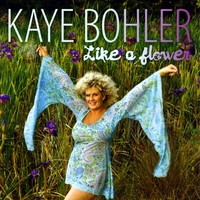
Kaye Bohler - Like A Flower


One of the constants in my life since I first moved to Northern California over thirty years ago has been the local music scene.  Ever since the blues moved west in the 1940’s the area between Monterey and Eureka,- the Bay, Coast, Redwoods, Peninsula and Delta - have been  magnets for musicians and artists.  Well above the average per capita number of musicians and artists live here than live in most other major metropolitan areas. Northern California has its own cadence and its own style.

The Bay Area was overrun with great players well before the blues-based “San Francisco Sound” - that counterculture rock music performed live and recorded by San Francisco-based rock groups of the mid-1960s to early-1970s.  After World War II  the “West Coast Blues” style exploded all over the Bay Area.  It was typified by T-Bone Walker and Charlie Christian with their jazzy swing versions of Chicago jump blues.  The West Coast Blues became the progenitor of the “San Francisco Sound.”

The result of all of this talent in one place inevitably leads to recording sessions by neighbors and friends.  Such is the case with Kaye Bohler’s release Like A Flower. Kaye is a Bay Area singer/songwriter who fronts her own blues band, The Kaye Bohler Band.  On Like A Flower she enlists the help of two Northern California blues guitar legends, the amazing Robben Ford and the incomparable Tommy Castro.  When put all together by Berkeley-based Red Rooster Studio Producer Tony Lufrano you get a great album of Kaye Bohler written blues tunes that provides a wonderful snapshot of the West Coast Blues community in the early 21st Century.

Bohler has a deep blues voice with decent, but limited, range.  Yet, that is not necessarily a bad thing.  Billie Holiday’s voice lacked range, was thin, and due to years of excessive drug use, quivered.  There is more to singing than range, such as delivery, and Bohler makes the most of what she has.

It is the rotating band line-ups that standout on this release. Predictably, the tracks with Tommy Castro and Robben Ford are incredibly tight, However, the band on every track cooks despite ever-changing band personnel.  It seems as if every track is backed by a different group of players. It makes for a “Who’s Who” of today’s Northern California blues player community. Kaye is joined by her husband drummer John Paul and lead guitarist Sammy Varela, both from Kaye’s Bay Area Band; bassist Steve Evans from the East Bay’s Chris Cain Band;  Berkeley-based session guitarist and instructor Garth Webber; percussionist Cubby Ingram from the San Francisco group What a Band!;  San Francisco vocalists Kathy Kennedy and Keta Bill; Bay Area guitarist Danny Caron; Oakland trumpteer Tom Fuglestadt; Walnut Creek saxophonist Armon Boyd; tombonist Joel Behrman from the San Francisco group Brass Mafia; Bay Area drummer Jimmy Sanchez formerly from the Delta Rhythm Kings and now with the Flying Other Brothers; San Francisco trumpeteer Tom Poole; and the list goes on and on. 

That, in itself, makes Like A Flower an important album in the history of the “West Coast Blues.”  I know of no other album that brings together the backbone of the Northern California blues-based music community in one release. Future music lovers will be able to listen to this 2009 album and hear and feel the West Coast Bay Area blues music scene of the first decade of the second millennia.

They should like what they hear.

- Old School

Buy here: Like a Flower
Buy here mp3: Like a Flower


Thursday, February 3, 2011

Junior Wells & The Aces – Live In Boston 1966

Do you want the real thing? Well, here it is. The incredible Junior Wells is one of the very best harmonica players of all time and this previously unreleased live show captures him inebriated and rocking hard. Junior’s partnership with Buddy Guy contains some of his best work, but here he is playing a Boston nightclub in 1966 with an excellent bunch of musicians from Chicago. The great Fred Below is on drums joined by guitarist Louis Myers and his brother Dave on bass.

Goddamn, these muthers boogie like no other!  There are some great slow songs like “Worried Life Blues” and “That’s All Right” but where they excel is on the uptempo jams. They come out swinging with a killer version of “Feelin’ Good.” The band sets up an instant party groove and Junior is in great voice and you can tell that he really does feel good. When he says that they’re gonna boogie til the break of day, you know he means it. “Man Downstairs” has some great harmonica playing and keeps the boogie flowing nicely. The band really stretches out on “Junior’s Whoop,” a killer 8 minute workout that really rocks the house. There’s a high energy of the hit “Messin’ With The Kid” that gets everyone worked up.

A couple of blues standards like “Hideaway” and “Got My Mojo Workin” get the Junior Wells treatment and Louis Myers throws in a few nice jazzy guitar licks to keep things interesting. The crowd loves this band. In between songs you get to hear Junior talking to the rowdy audience and joking with the other musicians onstage.

Play this disc loud on your stereo and you really get the feeling that you are there. Bands just don’t cook like this anymore. The playing is lean and mean, tight but loose. Chances are these guys didn’t practice much together but they all knew the material so when they hit the stage they could jam together without things ever getting stale. The only excuse you have for not patting your feet to this great record is you don’t have any.

--Woody

Buy here: Live In Boston 1966

Buy from Delmark (and listen here)

Tuesday, December 14, 2010

Lynwood Slim and the Igor Prado Band - Brazilian Kicks


It is just the Blues. It is often said among musicians that playing the “Blues” is “emotive” and requires less technical skill than playing “Jazz.”  That is a gross over generalization.  I don’t know of a guitarist who would argue that it takes more skill to play, say, “Baby, Please Don’t Go” by Big Joe Williams than it takes to play “Nuages” by Django Reinhardt.  It doesn’t.  However, there is, in fact, a whole sub-genre of “Blues,” as exacting as “Jazz,” that requires the skills of the technical “Jazz” musician in a “Blues” player -  the “Jump or Swing Blues.” 

Jump or Swing Blues is a delicious synthesis of emotion and technical prowess.  It mixes conventions. Blues harp players play alongside Jazz horn players. Blues guitar styles mix with jazz guitar styles. Pioneered by the likes of big band leaders Cab Calloway and Louis Prima, it is now practiced by modern day troubadours such as Brian Setzer, Big Bad Voodoo Daddy and Cherry Poppin’ Daddies. Yet, I have never heard better jump jazz and blues than Lynwood Slim and The Igor Prado Band on their new Delta Groove release Brazilian Kicks.

Igor Prado is a self-taught left-handed guitar player who merely flips a right-handed guitar over to play.  He doesn’t restring it. The high E is on top (Coco Montoya does the same thing and I have never been able to understand how he does it.)  For years Prado has been in Brazil playing jump blues and western swing.  He has three Prado Blues Band releases under his belt and and a well-received 2007 solo Blues album blues entitled “UpsideDown.” The Igor Prado Band adds Yuri Prado on drums, bassist Rodrigo Mantovani and saxophonist Denilson Martin and, on Brazilian Kicks, special guest pianist Donny Nichilo. 

Lynwood Slim has been blowin’ the harp since he was fifteen years old and has his own recording history with six past releases  - starting with “Soul Feet” in 1996 and, most recently, in 2006 with “Last Call.” In addition to his formidable harmonica chops this dude has one of the greatest smooth easy jazz/blues voices out there. His band, on his last album included guitarists Kid Ramos and Kirk Fletcher, transplanted boogie-woogie piano master Carl Sonny Leyland and mandolin master Rich Del Grosso,

Combining the talents of these artists was pure genius. Prado’s guitar playing is special.  The clear, crisp and clean jazz guitar tone and Django Reinhardt-like artistry are dirtied just enough by the harp, horn, bottom and the blues tone of other guitarists . When you add Slim’s silky vocals you are taken to a place somewhere between the 1940’s and tomorrow.

“Shake It Baby” is James Brown-infused, Tom Jones singing “You Can Leave Your Hat On,” type performance with a short, but stellar, guitar solo and, of all things, a brazilian flute,“Is It True?” is a 1950’s jump blues with an amazing mixture of guitar styles - a down and dirty modern blues guitar with a jazz guitar back beat that gives way to a piano lead punctuated by horns.

“Bloodshot Eyes” is a track of wonder.  I was raised on black and white “I Love Lucy” TV reruns and the tune is a return to childhood.  The song sounds like it comes right out of the Ricky Ricardo songbook. The saxophone and guitar on those old shows were never this good.  Igor Prado’s Band’s Brazilian influence is perfectly suited for the song. A jump blues vamp  “My Hat’s On The Side Of My Head” follows with such smoothness that it will have you simultaneously reaching for your tap shoes and fedora.   Then, “Blue Bop” will have you boppin’ fast and hard. The orchestration, arrangement, guitar lead, and horn solo are as good as it gets. I put this track up there with Joe Pass’, Herb Ellis’, Jake Hanna’, Plas Johnson’s and Harry “Sweets” Edison’s rendition of Oscar Peterson’s “Seven Come Eleven”on their 1973 release as one of the greatest, fast, jump jazz blues that I have ever heard.

By now the pace of the album is frantic so Slim slows it down with a slow Chicago-style Blues song, “Little Girl.”  However, the pace does not slow for long. Next, the band cranks it up with another bopper, “I Sat And Cried."  It has a wonderful background piano and accenting horns, but is mainly Lynwood Slim’s voice and upbeat drums.

Then, like in an old movie - the brass section slowly comes in and a slow handed precise jazz guitar plays a song suited for Frank Sinatra, “Maybe Someday.” You can envision the audience swooning to Slim’s sultry voice and the big band, Duke Ellington-esque blues arrangement. Yet, just as you are lulled into that soft, silky 1940’s sound Lynwood Slim busts out his harp and gets dirty with “Show Me The Way.”  On this one there is an edge to Slim’s voice and to his harp as he performs this gritty Chicago “lost my baby” blues song.  Transportation is provided back to the big band swing era with “Bill’s Change,” a instrumental that showcases Prado’s guitar and Martin’s saxophone.

On comes “The Comeback,” which adds piano and Slim’s blues to big band music. It creates a heavenly marriage of blues and jazz styles that uses multi-layers of sound and rhythm. When “The Way You Do” makes you realize that “Black Magic Woman” was really just an awesome jazz tune. The track is just as good as Santana’s but has a cleaner guitar sound - as if Bob Bogle of the Ventures was playing lead instead of Carlos. The disk concludes with Slim on the instrumental “Going To Mona Lisa’s” - a straight ahead harmonica blues jam. 

These tracks are beautiful, emotive, inspiring and technical.  This stuff takes significant musical skill and, yes, - it is just the Blues.

- Old School

Buy here mp3: Brazilian Kicks
Buy here: Brazilian Kicks


Tuesday, October 5, 2010

Swississippi Chris Harper - Four Aces And A Harp


Lately I have received a plethora of blues harp albums.  By the volume received you would think that everyone in America plays a pocket blues orchestra. A few artists are distinctive - a cut above the rest.  But, generally, blues harmonica players play covers. Most blow a decent Willie Dixon, Lightinin’ Hopkins or Muddy Waters tune or two.  The problem comes from a desire to compare.

I have heard the original recordings. The originals are old, scratchy and monophonic - victims of the state of technology at the time they were recorded.  Yet, they are full of heart, soul and passion.  Through the tin cup, hollow bass, sound of the original recordings there is the visage of true emotion and amazing instrumental improvisation.  Unfortunately, many modern blues artists take such improvisation as gospel and play exactly as the blues master recorded it.  So, how do you compare the original rendition to that of the cover? You look for the artists to make the songs their own.  You listen for feeling. You hope for the unexpected.  Does it move you or is it a mundane faithful reproduction?

One of the discs I recently received is a new release Four Aces And A Harp from Swississippi Records with namesake “Swississippi” Chris Harper (what better name for a harmonica player than “Harper?”) blowing eighteen tracks of blues - fifteen of which are covers of songs by blues greats, two that are originals and one that is a converted jazz classic.  Harper pulled together a few legends - Willie “Big Eyes” Smith and John Primer (Muddy Waters’ bandmates) and Bob Stroger (Otis Rush’s bassist), and grabbed some of the best young traditional blues talent around, to record the CD.  According to the liner notes his aim was to produce a traditional Chicago Blues album.  However, what resulted was a blues lovefest as the musicians sat in a circle and played and recorded.  Many of the tracks are supposedly first takes.  As a consequence they contain that instrumental improvisation and freshness lacking in so many other modern traditional blues albums.

Harper is no slouch on the mouth organ.  He started sucking wind when he was 12 years old and, over the years, has learned from some of the best.  He has a tone, tempo and technique suited to the traditional Chicago Blues genre.  With vocal help from modern day blues players as varied as Jimmy Burns of the Jimmy Burns Band, Tail Dragger and Kenny “Beady Eyes” Smith (Willie “Big Eyes” Smith’s son), and from legends Smith and Primer, Harper invigorates the old material and also provides soulful renditions of his own songs.

It is a special treat to listen to Harper’s mournful harp wail on the song “I Smell Trouble” as it perfectly accompanies a heart-rendering vocal performance by Jimmy Burns. Heavy blues guitar is embellished by Harper’s warble on Muddy Water’s classic “Long Distance Call.”  Sonny Boy Williamson’s “Eyesight To The Blind” is given a blues swing treatment in which each performer gets to shine.  Sleepy John Estes’ “Worried Life Blues,” which has probably been performed by every blues player from B.B. King to Eric Clapton to Kenny Wayne Shepherd, is given a down and dirty slow drudge cadence that actually sounds like the band is worried.  The sole “non-blues” song on the album, an instrumental version of Duke Ellington’s “Don’t Get Around Much Anymore,” crosses out of the big band jazz genre and grabs the feeling that the blues get when greats such as Pinetop Perkins tickle the ivories.

There is much, much, more on this album and it is all worth a long listen.     While the album does not break new ground, it is a strong effort that contains stellar recordings of many well-known Chicago Blues numbers by some of the original blues masters and their attentive modern day students and progeny.  The trading of harp leads by Harper and Willie “Big Eyes” Smith on Smith’s “Born In Arkansas,” by itself is worth the price of admission.

This is not a mundane faithful reproduction.  It is unexpected and full of feeling.  Keep blowin’ Swississippi.  Keep blowin’.

- Old School

Buy here: Four Aces & A Harp


Tuesday, September 7, 2010

Mitch Kashmar & the Pontiax - 100 Miles To Go


In high school there was this dream.  I was learning to play guitar and, on a hot summer day in Southern California - too hot to be out in the sun inland - too crowded at the beach to find a legal parking space - I’d frequently retreat to my friend Bill’s parent’s cool basement. Bill played drums which he stored in this large concrete-walled finished foundation room that was half dug into a hillside overlooking San Pedro - Long Beach harbor.  Bill’s friend, Dudley, would drop by with his bass,  Occasionally Dudley’s brother, David, and sometimes a mutual friend, Robbie, would show up with their guitars.  Once in a while we would invite a keyboard player, horn player, harmonica player, another guitarist or a vocalist to join us.  This happened frequently enough that we got good - real good.  We had a repertoire of songs and jams that we repeated, traded, and vamped.  Soon we were playing dances and events. Sometimes we even got paid. We recorded material and made a few reel to reel tapes - the preferred format of the day - that could later be mixed down, and made friends with radio dj’s and club owners.  Many of our recordings have yet to make the light of day and I have no idea if they still exist.

High school ended and our music scene changed. We realized we could not then support ourselves playing music.  We started families, left for far away colleges, joined the military or took jobs away from LA.  It became a rare treat to all be in the same place at the same time and even rarer to be able to play together.  But, every time we did, the dream began again - just like in high school.  There is still a glimmer of it now when we see each other.

In the early 1980’s, while I was moving north to San Francisco for law school, Mitch Kashmar & the Pontiax were moving south from playing locally the Santa Barbara, San Luis Obispo and Ventura County areas making the next step to, Los Angeles, the big city.  Performance tour progressions have not changed appreciably since then.  Bands that wanted to expand from a local phenomena to have a West Coast  presence oscillate between the Bay Area, Los Angeles and, sometimes, San Diego, Portland or Seattle.  This was especially true of blues bands since the Central Valley and inland areas were not as kind to blues bands as they were to country western bands.  Mitch Kashmar & the Pontiax’s shot at stardom taken while they were in their twenties and that  went one or two steps beyond the West Coast .  They played Chicago, the Mid-West circuit and Europe, a hot bed for American blues.  The band went through three different line-ups but, it is the one that is on this album that had the dream, and a little cash to try to make it a reality.

Kashmar is a master harmonica player. In 1999, he began his own solo career and toured with his own band winning the 2006 Best New Artist and 2007 Best Instrumentalist - Harmonica, Blues Music Awards.  Here are just some quotes about him from bandVillage:

He's shared the stage with some of the biggest names in blues over the years, including Big Joe Turner, Eddie 'Cleanhead' Vinson, Lowell Fulson, Jimmy Witherspoon, John Lee Hooker, Pee Wee Crayton, and Johnny Adams, among others. Kim Wilson – no slouch on harp or vocals himself – offered this assessment: “Oh man, is he tough!” Charlie Musselwhite: "Your playing and singing are superb.” John Hammond: "...unbelievable; a great singer and up there with the best harp players I've ever heard.” And the late William Clarke had this to say: "Out of all the younger generation of blues harp players, Mitch Kashmar is my favorite. He's also a first-class vocalist -- his singing really knocks me out." And Stevie Ray Vaughan paid what must be the ultimate compliment from one musician to another: “Can I sit in?”

Even with these great compliments monetary success and the large stage have eluded Kashmar. So it is with this album, 100 Miles To Go,  a reissue of the long out of print classic 80’s recording by The Pontiax that featured him, with which Kashmar tries to recapture the dream.

It works. My God, it works.  Everything is written by Kashmar and the stuff is blues TNT. The first ten tracks are reissues of old material.  They contain that “20 year old’s” exuberance of being on your own, doing what you love, with anticipation of the future that is combined with the mayhem and excitement of a traveling, working, band.  Pick any of the first ten tracks.  The band is tight, the blues exciting and Kashmar blows his mind out on the harp.   There is even a sort of tribute to old friends who are no longer with The Pontiax.  On track 6, “Horn of Plenty,” the late, great harmonica player William Clarke can be heard playing the first harp.

The last two tracks of the album are where a glimmer of Kashmar’s Pontiax dream of his 20’s shows up as Kashmar enters his 50’s.  These two tracks  are “bonus tracks.” Kashmar was able to assemble almost all of the old touring Pontiax band heard on the first ten tracks - Bill Flores on guitar and tenor sax,  Jack Kennedy on bass, Tom Lackner on drums and Pontiax 1980’s friend, Jim Calire on keyboards and tenor sax.  Track 11, “When You Do Me Like That (“I Wanna Do You Like This),” is a raunchy, syncopated, party of a blues that shows how much the band has matured and how close these guys play together.  The final track, “The Petroleum Blues,” is timely and catchy as a blues gets. It could become an rallying anthem in the wake of today’s oil wars and spills.

Mitch, congratulations sir, keep that dream alive and I hope to hear more from you and The Pontiax.  Blues bands at 50 are infants - just ask Pinetop Perkins and Honeyboy Edwards. 

- Old School


Buy here: 100 Miles To Go


Tuesday, August 31, 2010

Bob Corritore And Friends - Harmonica Blues


Although the modern mouth organ was invented in the early 1820's in Vienna, Austria, it wasn't until 1857 when Matthias Hohner shipped one of his creations to relatives in the United States that the blues harp began to evolve.  It is said that it was so portable and such a hit that even Abraham Lincoln carried one in his pocket.  It became the Civil War soldier's portable orchestra and was known to be played out west by lawman Wyatt Earp and outlaw Billy the Kid.    

Harmonicas were first recorded in the 1920's on "race records" - music intended for African Americans.  These recordings memorialized great blues harp players such as Walter Horton and Sonny Terry.  The second great wave of American blues pocket piano players came in the 1950's with such notables as Sonny Boy Williamson, II, Little Walter, Big Walter Horton and Howlin' Wolf.  This was the era when the mouth harp met the microphone which allowed the instrument to be heard above the electric guitar and drums.  The sound became integral to the bump and grind music of the day.  It is this era, the 1950's-early 60's, that Bob Corritore and Friends recapture on Harmonica Blues.

The disk is a 15 track compendium of recordings from 1989 through 2009 of Corritore with some of the greatest blues musicians of the 1950's and early 1960's. Only one song, "1815 West Roosevelt,"  was written by Corritore.  It is an instrumental named after the address for a long gone blues joint called "Club Alex" on the West Side of Chicago that use to feature Muddy Waters.  The remainder of the album is comprised of blues music written and performed by the creme de la creme of early Delta and Chicago blues artists.

For 20 years Corritore has been the host of Arizona radio station KJZZ's weekly radio show "Those Lowdown Blues" a show that brings the music of, and interviews with, bluesmasters to the desert airwaves. Corritore also books all of the entertainment for his nightclub the Rhythm Room (Phoenix's top spot for national touring blues talent.) As you hear on this record he is also a world class blues harmonica player. As a result Corritore was able to assemble a veritable Who's Who list of artists to play with him on "Harmonica Blues."

The album features the late Koko Taylor singing her song "What Kind Of Man Is This?" with Muddy Waters' guitarist Bob Margolin and drummer Willie "Big Eyes" Smith.  Legendary Louisiana Red sings his wife's song "Tell Me 'Bout It." Dave Riley, probably best known as the engineer for the Parliament-Funkadelic bands, warbles delta blues harmonica immortal Frank Frost's "Things You Do." The late Nappy Brown wails on the late Texas country blues legend Andrew "Smokey" Hogg's "Baby Don't You Tear My Clothes."  Robert Lockwood, Jr. performs the immortal Jimmy Rogers' "That's All Right." Big Pete Pearson, known as Arizona's King of the Blues, tackles the late Bob Geddins' "Tin Pan Alley."  Tomcat Courtney, a San Diego blues guitarist who didn't release his first album until he was 78 years old, belts out his blues  "Sundown San Diego."   Eddie "The Chief" Clearwater, a Chicago blues legend and contemporary of Magic Sam, Otis Rush and Freddie King, shreds on vocals and guitar on his blues anthem "That's My Baby." Howlin' Wolf's main piano player until 1968, Henry Gray, sings his song "Things Have Changed" with the late great Chico Chism, Howlin' Wolf's last drummer, on drums.  Chism also joins the inimitable and seemingly ageless Pinetop Perkins on Perkins' tune "Big Fat Mama." Chief Schabuttie Gilliame, a local Phoenix blues legend, performs his blues "No More Doggin'." Dave "Honeyboy" Edwards who, along with Pinetop Perkins are the oldest Delta blues players still touring the US, sings the blues of legendary Memphis Minnie McCoy's called "Bumble Bee."  Lafayette, Louisiana's Carol Fran plays her song "I Need To Be Be'd With" while the late Chism again sets the pace on drums. The album ends with the late Little Milton singing his "6 Bits In Your Dollar" accompanied by Henry Gray and Chism.  Throughout it all Corritore blows a mean harp as an accompaniment to the work of these blues legends.

This is a special album.  It contains what may be some of the very last recordings made by some of the greatest blues artists and sidemen of the 20th Century.  To be able to bring them all together in one album on which they play with such joy, abandon and soul is a thing of beauty.  The album itself is a graduate level class in the harmonica blues given by a master instructor surrounded by the originals who pioneered the genre. 

If you love Delta and Chicago harmonica blues this recording is a must have for your collection.

 - Old School


Friday, August 27, 2010

The Coppertone - Hidden Dreams


There are two different ways to view the blues, one is to see it as a limited musical form with only so many variations, so that when a genuinely exciting bluesman comes along, say, a Stevie Ray Vaughn or Joe Bonamassa, we end up complimenting them by degrees or on their technical veracity. The other way is to come to the blues from the emotional end, and view the 12 bar turnarounds as emotional bookends to the sorrow or lust or longing or passion of the singer. The Black Keys have been straddling this line for albums, and the reality is that very few bluesmen or women are willing to belly up to the bar and take the John Lee Hooker approach: sparse drums, unusual counts, playing behind the beat and, god help the singer, let the vocals and the guitar stand naked in space.

The Coppertone’s album Hidden Dreams takes a cue not only from John Lee Hooker but Portishead as well. Amanda Zelina’s voice, alone, has the emotional strength to stand alone in the opening tracks "Heroine" and "Nighttime Wishes," but can get placed into the maelstrom of of sound that is the fourth track, "Satisfied Mind." The drums aren’t quite John Bonham’s "When the levee Breaks", but the crunch of the guitars is utterly unexpected from the sparse blues sound of the first three tracks. Instead of pretending that the last 80 years of music hadn’t happened, Amanda elegantly, forcefully makes the case that with the blues as her base she’s going to use anything she damn well pleases for her songs.

"Heroine" opens the album, Nick Skalkos’ ambient drums shaking in the big empty room, before Amanda’s echoing voice cries out, her long vocal lines contrasting with the rhythmic guitar bouncing along, syncopated to the drums. Lacking other members to fill out the sound, we can practically hear the walls echoing their sound. And that’s the whole point. John Lee Hooker and Son House made records in shoeboxes that did nothing to take a hint of the edge off of their harrowing tales of deep south blues. In face, that ambient sound can help to define much of the sound and very few bands use it much if at all these days. Those early blues albums make you hear the room, not just the musician.

"Nighttime Wishes" is one minute and 24 seconds of blue dirge run through the White Stripes mini amp. Amanda shares Jack White’s love of miking a semi-hollow body guitar so that you can hear the damn guitar, every single atonal note, and not just the amp. And then we get emotional whip lash by walking into the hoedown of "One of a Kind." It’s the eternal story of romance and boy meets girl. Yes, I want you/and I know you want me too/I gonna getcha/ gonna make you mine/there’s two of us in this old world/but together we’re one of a kind.

In part, Zelina’s skill at the blues lies in her influences. Hooker and Son House taught her what not to play, self evident in the restraint that she shows on the song. There is nary a note wasted and quite a few that you expect that stay in her back pocket waiting for  another son

With slow rise of feedback, "7 of Spades" is practically metal filtered through the old school mike distortion once favored by Mark Sandman of Morphine. Nick’s entire drum kit is shaking providing the backbeat to Amanda’s heavy guitar riff. She teases the riff with bits of slide mixed in, something unlikely to show up in your average metal album. So much emptiness/but nothing to give/sold your soul to the devil/but you still can’t save. All the anger in the world cracks open and pours out of the wronged woman.

Hidden Dreams, a title track pushed down to the sixth track, lives and dies from the heavy backbeat, slow and steady, like a heartbeat that Amanda can sing a song of lonliness and despair over. The rhythmic touches can’t hide the heaviness of the bass here, as if Zelina has been listening to the deep depair of Robert Johnson’s thumb hitting those bass strings as the sound that grounds everything else in the world to that one thumping beat.

"Mile type of Love" takes us closer to Nashville, edging into the storytelling that has launched a thousand bumper stickers over the years. The earnestness of the love affair that might have driven Patsy Cline to tears, Amanda sings the closer to the night’s set as the love that she set free didn’t come back. So what did she do? Driven 700 miles/and picked up all the pieces/we left a long time ago. Pour another cheap beer for the drummer.

But its up to the second to last track, "Run," to fuse some of the best efforts into one beautiful dirge, the urgent tension of John Lee Hooker’s rhythms mixed with the porcelin Portishead vocals, and you have 2 minutes and 53 seconds of liquid emotion that leaves you gasping for more when it fades out. The fact that the final song, "Ramblin’," is a slide guitar drenched cover of Robert Johnson’s "Ramblin’ on my mind", should lay Zelina’s intentions laid bare. And the beauty of it is, given the high stakes gambling that she’s taking on with her influences, The Coppertones do an excellent job of ceding not a bit of ground

Its not a long record, but delicious from beginning to end, each track worth a listen. Damn but there are a lot of good bands up in Canada these days!

With a slide guitar and a bottle of bourbon – the fearless rock iguana


Tuesday, August 3, 2010

Elvin Bishop - Red Dog Speaks

Famous guitarists frequently name their favorite guitars. Eric Clapton had "Blackie," his black Fender Stratocaster.  B.B. King had his "Lucille's" to remind him to never again run into a burning building. Dick Dale had "The Beast," a gold Fender Strat specially designed to take the abuse he applied to the guitar. Billy Gibbons created "Muddywood," from a porch board taken from Muddy Waters' birthplace. Elvin Bishop has "Red Dog," a cherry red 1959 Gibson stereo ES-345.  It is Red Dog that is the subject of his new album Red Dog Speaks.

Bishop's songwriting is, for many, an acquired taste.  His songs are mostly talking country blues in the style of country blues pioneer Jerry Reed.  The lyrics are usually corny.  Combined with Bishop's stunning resemblance to Harpo Marx you get the feeling Bishop will "go for the joke" and let you in on it when he can. The first track, "Red Dog Speaks," is a talking, walking blues about Bishop's ES-345. On "Fat & Sassy" Bishop recalls a great Thanksgiving Dinner and bemoans what his doctors now allow him to eat.  "Blues Cruise," is another talkin' blues, likely written for an actual Blues Cruise, that calls on Bishop's friends Ronnie Baker Brooks, Tommy Castro, Buckwheat Zydeco, John Nemeth and Roy Gaines to join in and play. "Clean Livin'" is a solo talkin' blues retrospective in which Bishop reflects on what has happened in his lifetime and about having grown old with an eye for the ladies.

There are also a few odd song choices on the album. Bishop performs an instrumental "Doo-Wop Medley" that covers the old standards "In The Still Of The Night" and "Maybe." He also does a cover of the traditional melody "His Eye Is On The Sparrow." In both cases the songs are rather old and dated but saved by Bishop's amazing guitar virtuosity. He also offers his own instrumental, "Barbeque Boogie," a guitar, piano, bass and drums blues jam that I suspect was actually recorded at an Elvin Bishop hosted backyard barbeque.

The best vocal tracks on the album are covers. Bishop does an amazing job on Crazy Cajun Huey P. Meaux's "Neighbor Neighbor;" he wails on Jimmy Cliff's "Many Rivers To Cross;"  belts out Otis Spann's "Get Your Hand Out Of My Pocket;" and slow burns his rendition of blues legend Leroy Carr's "Midnight Hour Blues."

On an album named after what Bishop's guitar can do the vocals hardly matter.  This effort is all about Red Dog.  Bishop can blow the listener away with his guitar playing and this album proves it.  It doesn't matter if you like or don't like Bishop's lyrics or his jokes.  It doesn't make one bit of difference whether the lyrics are talkin' blues or the music is improvised. The lyrics are of secondary importance. This is the blues. Just listen to Bishop make Red Dog howl, cry, scream and talk.

Elvin Bishop is a legend not because of "Fooled Around And Fell In Love" and "Travelin' Shoes" (although those hits probably put a large chunk of change in his pocket.)  He is a legend because, ever since 1963 when he first played with Paul Butterfield, he has been one of the finest guitarists - especially slide guitarists - alive.  Bishop makes Red Dog speak. Good boy Red Dog.

- Old School

Buy here:  Red Dog Speaks


Tuesday, June 8, 2010

The Danny Cowan Group - Driving Back To Texas

Footnotes.  If there is one thing law school taught me it was to always read the footnotes.  That is where the best stuff is hidden.  There is where you find the intrigue - backroom compromises, half-hearted arguments and justifications.

Footnotes also memorialize a person’s fifteen minutes of fame in and about great events or amongst historical figures.  Those asterisked, margin-numbered, individuals occasionally have stories as compelling as the historical figures to which their stars are appended.  Yet, the paths of those lives are harder to research and more difficult to follow.

In 2001, I downloaded a free album from download.com called Driving Back To Texas by The Danny Cowan Group.  I knew nothing about Danny Cowan or his “Group.” I was playing “spin the musical wheel” with the download.com search engine for decent electric guitar blues.  The pointer had ended up at Danny Cowan Group album so I downloaded it. 

The music is original - written by Danny Cowan and, his then-wife, Tracey Cowan.  On this release Tracey sings.  She has a deep-throated sexy voice that perfectly compliments Texas-style electric blues.  Danny plays guitar and also sings. The remainder of the “Group” is comprised of Craig Ricks on bass and Hector Gonzalez on drums.  The album was produced by Marius Perron of TAZ Productions, San Antonio, TX.  That is all I could find out about the band at the time I downloaded the album.

The music is hot blues.  Danny is a white blues guitar master with shades of Bob Wills & The Texas Playboys, B. B. King, Eric Clapton, Jimi Hendrix and Stevie Ray Vaughan all rolled into one guitarist.  The songs are wonderfully written and the band is smoking.  Best of all the album was, and still is free!

Recently, I heard Danny Cowan’s name come up in connection with a 1976 appearance on the TV show “Austin City Limits” with an obscure band called Augie Meyers & The Western Headband.   It was only thereafter I discovered Danny Cowan was the ultimate rock and blues footnote.  He is the man who readies the audience for the headliner.

Danny did shows in the 1970’s with Doug Sahm as the Sir Douglas Quartet and opened for Jimmy Reed, Gatemouth Brown and Willie Nelson.  In the mid-1980’s he formed his own band which opened for Chuck Berry, The Supremes, Foghat, Roy Buchanan & many other headliners.

The Danny Cowan Group is no longer together.  This album and the group, like Danny, are a footnote to great electric blues guitar music. 

Danny has formed a new band - the Danny Cowan Band.  His ex-wife is no longer with him (although he still does some of the old material they wrote together).  Rick Jackson plays drums. Bass is played by Paul Everett.  Ed Fry has taken over the vocal duties. Danny just plays guitar. I don’t think they have released an album but a few new tracks can be heard on their website.

--Old School


Footnote: The album is still available free at http://music.mp3lizard.com/dogtrax/.  A  non-compressed pristine version is available directly from  DogTrax Records for $10 at http://www.dannycowangroup.com/Bandpage.html where you can also listen to the entire album online.

Tuesday, April 27, 2010

Tinsley Ellis - Speak No Evil

Speak No EvilQuick. Name the 2010 Rock Blues Album of the Year.  Can't do it?  Try this.  Take a dose of Warren Haynes jam blues.  Stir in some Allman Brothers and Freddie King.  Toss in blues licks as smooth as Eric Clapton and as biting as B.B King.  Squeeze a dash of Stevie Ray Vaughan on top.  Add a scorching blues voice, then, simmer until it burns.  Sound pretty good?  It should because it describes the Blues Foundation's 2010 Rock Blues Album of the Year award winner Speak No Evil by Tinsley Ellis.

I heard you say to yourself  "who the H-E-double-toothpicks is Tinsley Ellis?" You would think that his continuous touring since 1988 would give him greater notoriety.  It just goes to prove that some of the greatest blues rock guitar players are obscure even when they are in plain view.

Tinsley Ellis is a power blues rocker who Atlanta Magazine once declared "the most significant blues artist to emerge from Atlanta since Blind Willie McTell."  Ellis picked up the guitar for the first time in 1965 at the age of 8.  A chance interaction with B.B. King at one of B.B.'s concerts in 1971 so impressed Ellis that power blues rock guitar became his passion and life's work. At the performance Ellis sat in the front row hypnotized by the King's guitar work. When B.B. broke a string on Lucille, he changed it without missing a beat, and handed the broken string to Ellis. Ellis still has the string.   

"Speak No Evil" is Ellis' twelfth album. All twelve are scorchers. Some would say that his album 2007 Live album Highwayman - Live is his best.  That may be because live Ellis is an inspired Ellis.  His shows pull something from deep in the soul.  His music is laced with amazing Wah Wah pedal work and blazing sustained leads.  In concert his songs carry into spirited blues jams.  However, it is on Speak No Evil that Ellis finally captures the concert feeling in his songs without the jams. From the first track "Sunlight Of Love," a driving electric blues piece that had me thinking back to the music of the Buddy Miles Express, to the twelfth and final track, "Rockslide," Ellis has you moving and grooving and rocking and rolling.  As soon as I completed listening to the album I started it again, and again, and again.  When I was done I still could not get enough and started searching for all of Tinsley Ellis' past albums.

To truly experience Ellis it is said that he must be seen in concert. He has played in every state of the union, Canada, Europe, Australia and South America. He has also shared stages with the Allman Brothers, Robert Cray, Koko Taylor and Widespread Panic. In fact, according to his website biography, he averages over 150 fiery performances a year. He is scheduled to play Biscuits and Blues in San Francisco, CA on June 2, 2010, a concert that you won't want to miss unless you catch him June 1, 2010 at the Crystal Bay Club Casino in Crystal Bay, Nevada, or on June 3, 2010 at Boulder Station Casino in Las Vegas, Nevada, or June 4, 2010 at the Doubletree Hotel in Bakersfield, CA, or June 5, 2010 at the Palms Playhouse in Winters, CA or . . . you get the idea.  Tinsley Ellis - smokin' rock blues coming to a venue near you.

- Old School

Buy here: Speak No Evil