Showing posts with label jazz. Show all posts

Friday, December 28, 2012

Pharoah Sanders - Black Unity


Over ten minutes into this fucker, and we've got trumpet over organ over every freakin' type of percussion reasonably imaginable... we start with bass lines like fingertips massaging you... then bells, then maybe a harp...?

Black Unity, all told, is one track, at 37:21... it's an exercise in tribal rhythm: it builds, and it builds and it FUCKING BUILDS, repeating and repeating and reiterating and synonymizing and reflecting and recapitulating... (and during all this where the trumpeter's still trying to out-scream and/or arpeggio Sanders... and he's giving it a pretty good go...!)

Black Unity is the free-jazzish version of black metal and/or grindcore:

it's a delighted, religious swoon of a ceremony, and this ceremony, this sonic invocation... about chaos: a celebration of the unknown, and of our relationship to it... swelling keyboards at 19:30, again....

Dig that xylophone at 19:00... bass plucked at random as though dictated by the Gods... strings plucked above their bridge at 28:00...

It waxes, it wanes... it's sometimes a melody, sometimes a percussion, often both... it's "music" deciding, however coyly, whether or not to make an appearance....

Black Unity shows the majesty of tenor sax, as, above all, a leader, a sonic Herald, a modernized tribal conch shell... it rarely plays, yet completes the scene when it does... and you can feel it, when it's silent, dictating the action from behind the scenes, a leader in sound... but then there it is, with 2:55 left in the tune, swelling in and out over the pulsing organ, so much activity, saying such a simple thing... with 1:11 (left) we're fading out... with Asian harpsichord.... fading out for over thirty seconds... dig that applause... dig that laaaaaast bell....

It's chaos in hand, via reed, as is the way it is, and should forever be... huzzah!

--Horn

http://www.amazon.com/Black-Unity/dp/B000VZXYHA

Friday, July 13, 2012

A Conversation with Pink Monkey


Pink Monkey are three cheeky, expert musicians who love irreverence and the musical manifestations of said attitude toward reverence in the form of musicians like The Ramones or Frank Zappa. Fortunately, for music in general and me specifically, they also just happen to play jazz.  What follows, as perhaps the above lede suggested, is the Sawtoothwave.com Interview.*

Sawtoothwave.com: If you yourselves could interview one musician, who would it be, and why?

[All] Frank Zappa, he was one of the original musical smart asses.

Your music seems dangerous, like jazz seemingly hasn't been in decades (to most modern listeners, particularly kids)--  like Coltrane and Dolphy getting in shit with Downbeat magazine in 1961 over their alleged “anti jazz” ... do you ever consciously consider precedents like that? What do you think of more "extreme," compared to most jazz musicians anyway, musicians like John Zorn or Peter Brötzmann?

[TK-- Tim Koelling, Saxophone] A big reason why Pink Monkey is so simple and out is kind of a rebuttal to the modern jazz scene. I love going to jazz clubs, but eventually I get bored - there is no reason “jazz” has to be accessible to only other musicians who understand what’s going on, or as background music. We all want to be rock stars!
[MK- Mike Koelling, Bass] Like Tim said, a lot of modern jazz gets boring. It’s just so cerebral that the common guy at the bar doesn’t get it. We would much rather be playing to a crowd of smiles than a few heads nodding in appreciation. We listen to a lot of John Zorn - We’ve even covered a few of his tunes. The Bad Plus is also a huge influence. Most importantly though we try to have a good time and keep things accessible and interesting.

Why "Pink Monkey"?
[MK] We had been playing for a few months and as a band bonding exercise we headed to mayfest in Chicago. After a lot of German beer, I ended up buying Tim a Pink Monkey and told him he had to wear it around his neck for the rest of the festival. A few steins deep I proclaimed “Let’s name our band Pink Monkey until we think of something better.” Five years later, we still haven’t come up with a better name.

For sax:
What type mouthpiece/ sax/ reed?
[TK] I play a Selmer series II alto, Otto link 7 mouthpiece, usually vandoren java 3's with a vandoren optimum ligature

The sax work on Ink suggests a bit of Zorn with Jackie McLean (particularly the intro to "A little bit off") and Rosco Mitchell... influences?
[TK] John Zorn is a big influence in my approach to pink monkey songs. Ne'eman from Masada was one of the first pink monkey "covers" I brought to the group. It's funny you mention Jackie McLean, one of my jazz professors my freshman year of college noted the tone similarities, but I had never listened to him at that point.

Whom do you think you sound like, versus who you actually wanna sound like (besides yourself, I mean)?
[TK] My favorite player, who doesn't really come out in the pink monkey project is Cannonball Adderley. The guts that are present in everything he plays, and sheer fluidity of all of his ideas are something that I continually strive towards. Other influences are Eric Dolphy, Andrew D'Angelo and all of the AACM guys. I want to sound like me though. My approach towards playing focuses more on melodic and sonic interpretation and manipulation rather than technical perfection or speed. It's about more than the notes I play.

If just alto, why just that? Many current sax guys use many types....
[TK] I play alto because that's my voice... It's also the only horn I owned until buying my first tenor last year (I added a soprano to my lineup last month). I've tried playing tenor in the group, but I hear everything on alto, and tenor gets lost in the bass and drums. I don't feel like the other horns speak the same language.

How does that growling through the alto hurt your throat, or does it? (I admire you, by the way, for that. I personally hate to growl.)
[TK] Growling doesn't hurt... It comes from the back of my throat, and at first was the byproduct of playing really loud and overblowing. I started learning to growl when transcribing cannonball in college trying to get the same intensity of his inflections and aggressiveness of his playing.

For Bass:
What type of strings/bass? Influences?
[MK] I play an American P bass special with La Bella flatwounds that are about 5 years old. James Jamerson got a great tone out of it, so why can’t I? My biggest influence is hands down my first bass teacher, Sam Greene. Sadly, after a little over a year of taking lessons with him, he was in a motorcycle accident, and most likely will never play again. I noticed him as the stand out player in the Chicago blues scene at the time. I went up to him after a show and asked him who I could take lessons from to sound like him. He gave me his number and told me to come by on Tuesday afternoon with $20. Still to this day every few months or so, something I learned from him will sink in and I’ll have one of those ah ha moments where something he told me 4 years ago will finally make sense.

Whom do you think you sound like, versus who you actually wanna sound like (besides yourself, I mean)?
[MK] I’d love to play like Victor Wooten. Sure, technically the guy is amazing, but the thing I like the most is that with all of his skill, he always seems to be having a blast no matter what he is playing. I also absolutely love Mingus. Nobody can swing like Mingus! I suppose I’d like to be somewhere between the two of them, but there are so many great bass players that I discover every day. I’ve really been digging Nathan Navarro lately. That guy has been pushing the boundaries of what live bass is supposed to sound like. I end up playing a lot of rock in my other projects though, so I suppose I sound like Nate Mendel trying to sound like Nathan Watts.

For Drums:
What type of drums...?
[NK-- Nick Kokonas, Drums] I play a Gretsch new classic four piece with zildjin new beat hi hats, a 20" zildjin flat ride, my main ride is a Sabian 20" artisan series, and a Ludwig speed demon bass pedal from the early 80's at least.

Influences?
[NK] All the jazz greats, I gravitate toward elvin, art blakey, tony williams (before he went into fusion), current Dave king, ?uestlove, Matt Wilson then billy cobham, Alphonse mouzon, and Peter Erskin.

Whom do you think you sound like, versus who you actually wanna sound like (besides yourself, I mean)?
[NK] I am really not sure who I sound like. I know I don't have the clarity of some of those guys, I play a little bit sloppy for what i want but fell in love with Dave king's playing and I'm constantly working on control and clarity in my playing. Rodney Holmes is always a strive with his tone. The thing that really inspired me was seeing Dave Brubeck at the Chicago symphony center. Hearing command of an instrument like that was an outstanding experience.

Best concert ever of yours? Worst? Describe in ridiculous detail.
[MK] The best show we had was definitely the release show for our live album. We knew it was going to be our last show for a while because Tim was leaving the country for a year, so we went all out. We had name tags for everyone that walked in the door ranging from “Batman” to “That kind of girl” to “looking to get laid”. It was an all out party. We had a piñata that was filled with candy and condoms and did a raffle for the leftover merch stock and shots of whisky. We gave away all of our CDs and I don’t remember much after that.

[TK] The worst concert ever never happened. In 2008 we were on the road heading to Des Moines, IA for our first “tour”. About halfway between Chicago and the middle of nowhere the oil line in our borrowed SUV blew and we were stranded on the side of I80 for 6 hours waiting for a flatbed tow truck. We ended up staying the night in Rock Falls, IL in the oldest, creepiest Holiday Inn ever. That wasn’t the worst part though, since we got there about 2AM we couldn’t buy any beer. We waited around most of the next day for friends with cars to come get us and drive back to Chicago. When we got back we had an impromptu BBQ at my sister’s place, got wasted, then proceeded to a bar to perform the most belligerent karaoke ever.

Who first inspired each of you (musician or not) to play your respective instruments?
[TK] Cannonball Adderley.
[NK] There was a bunch of kids growing up in my neighborhood that played drums. When I got to start playing music in school at age 12 I immediately said I want to play drums.
[MK] I can’t really say that there was one person that inspired me to take up the bass. I’ve always been a groove guy. I played trombone, rhythm guitar, and I even produced techno music for a while. I didn’t discover that my musical voice was best suited for bass until my mid twenties.

Each of your favorite albums lately?
[NK] I've been listen to a lot of now vs now which is amazing stuff. I just popped in Geoff Bradfield African Flowers (a former teacher of mine) again today and that will probably be in my cd player for a week or so
[TK] Lettuce - Fly
[MK] They don’t have an album out that I’ve been able to find, but I absolutely love the treatment that The Dirty Loops have been giving pop covers in their youtube videos.

How do you plan to arrange tracks? Is it pure improv? Do you agree on a key or a head arrangement ahead of time?
[MK] Arranging tracks is a crap shoot with this project. Sometimes Tim has a melody, sometimes, Nick has a beat, and sometimes I have a Groove. 10 Below was actually written by Tim and Nick while they were trying to play something energetic to keep warm in the practice space we were squatting in - in Chicago in February with the heat turned off- while I took a dump. Nick played a beat, Tim started playing sax and when I finished my business I played an active bass line. We usually have a head and some resemblance of form, but when we play we go mostly by feel. We all know how the tune will start. From there it’s like a tornado. The tunes tend to take on a life of their own and I just do my best to keep up with wherever they are going.

How do you record? Do you use the first takes of songs, or have these been played many time before live?
[MK] Just about all of the songs on INK have been performed live many times over the last 4 years. Most of the recordings were first takes. We’ve tried recording cleanly and doing overdubs, be every time we tried it, we lost the energy that comes from our live performances. When we recorded INK we knew we had 4 hours, and that was it. It’s not the cleanest recording, but it captures what we’re about better than anything else we’ve ever recorded. I also like that we each took one track to stretch out and do our thing. Each band member contributed one track independently of the rest of the band. For me that was Pike, Tim’s track was It was Yours, and Nick’s was Apple Skin.

Musically, how did the Ramones influence Pink Monkey? Did they?
[MK] I don’t know if they influenced us much musically, but they sure did influence our attitude. I love the attitude of punk rock. That punk rock attitude of “anyone can do this” is something we try to bring to jazz.

What kind of musical training do each of you have? How did you meet?
[TK] I grew up in a musical family, playing drums before I could walk while Mike sang.
I played Violin for 3 years starting when I was 9, all Suzuki method which is mostly ear training - probably what lead me to improvised music. I started playing sax at 10, in school. I started playing jazz around 12, learning scales, modes, and basic theory at summer band camps. I was fortunate enough to have an amazing public school music program with gigging musicians as teachers who encouraged us to practice a lot. They pushed the talented musicians a lot - if you were sitting around the band hall on a break they would force you to have an impromptu lesson, and would often write passes excusing you from other classes to spend more time playing. I got to play at Lincoln Center with our big band because of this, and my senior year of high school our music program was the first ever Grammy signature school, in 1999.
I studied music, jazz studies and saxophone performance at Webster University in st Louis my freshman year of college, then transferred to University of Iowa as a comm/sociology major. I think the 8 hours a day of practicing I did in High School burnt me out... and I wanted to learn some social skills that don’t come easily when you spend your time shut off in a practice room. I still played music at Iowa, continuing studies in jazz combos and big band.
I moved to Chicago to have access to a bigger music scene, but mostly played guitar for the first few years I was here (neighbors would complain when I played sax). Eventually we formed Pink Monkey. I’m also active in other bands, playing lead alto in a composers big band called The Heisenberg Uncertainty Players, playing and writing horn lines for Band Called Catch, alto in an awesome soul cover/tribute band The New Balance, and with whoever calls me on any given week. I even had a stint with a Billy Joel Cover Band.
[MK] I grew up in the same musical family that Tim did. We were encouraged to be musical from an early age. Looking back it was sort of weird. I actually got my start playing trombone. I may have worn wal-mart clothes to school every day, but I had a pro horn when I needed one. I went to the same amazing high school. I can’t say enough great things about it. You were expected to improvise over changes by 14 and play bebop at bebop tempos by 17. It’s actually the recordings of my band that won the Grammy, but Tim has the medal. We had amazing guest clinicians and got to play gigs with Clark Terry and Willie Thomas to name a few. I played in a section that could play Four Brothers to tempo on Trombone. It’s still probably the most talented band I’ve ever played in. Most of my band went on to Berklee or North Texas.
After high school I went to Missouri Western State College on a full ride musical scholarship, but I was disappointed. As a freshman, I was already one of the best members of the band. I dropped out of school, and started DJing Raves. I loved that the turntable was the first instrument that I didn’t fundamentally understand. Over 8 years, I forgot most of my music theory, but learned to groove. I moved to Chicago with the intention of continuing my DJ career. On a whim, I picked up the bass, and I rarely touch my turntables anymore. Shortly after I started fooling around on bass, I put out a craigslist ad, and Nick answered it. Originally we were going to play as a pop rock trio, but then Nick asked if we played jazz. It all took off from there.
After Pink Monkey started, I broadened my horizons and started playing in other acts. I learn a lot by playing in different genres. I learned how to up the stage show by playing in a kids music band called Super Stolie and the Rockstars, and I learned a lot about networking and hustling with my rock band, The Prime. I also do a fair amount of work on sub and cover gigs. I’m always learning something even if it isn’t advanced music theory.
[NK] I started in grade school band. I didn’t do much jazz in high school as I grew up in the alternative rock age. After high school I started playing hand percussion in a jam band and really got immersed in world music. From that I backed into the kit and immediately went into jazz.
How are you generally received live?
[MK] We are received very well live for the most part. Club owners who hate jazz love us. We do take some flack from some jazz artists, but we know how to have fun. I remember playing a gig with one group that played standards. During their set everyone was sitting in their seat, and even the musicians had a glazed over look in their eyes. We finished with Blue Monk and invited them all back up to jam, and they were having a blast and the entire audience had kicked their chairs to the side of the room to dance.

What kind of fans do you see? Mostly jazz? What kind of t-shirts do they wear, for God's sake??
[MK] Our typical fans are as diverse as our musical palate. My favorite fans are actually the people that happen to be in the bar when we take the stage. They are always surprised at how we sound. We can sure bring down the house in dive bars. Generally, we’ll play more rock clubs than jazz venues. I love the sight of a long haired dude in a slayer T-shirt digging some Monk inspired changes.

What standards did you start out playing? What "popular music covers?"
[MK] Like so many other jazz artists, we got our feet wet playing real book tunes. It didn’t take long for our stage antics start influencing our behavior though. I think Pink Monkey’s attitude was born when we were playing a martini bar and some buy walked out in the middle of our set. Tim followed him out of the bar and ½ way down the block while Nick and I kept things going in the bar. We do play popular music covers as well. The Bad Plus is one of our biggest influences in how to cover pop music. I can’t say we’re anywhere close to them technically, but we do our best to keep things interesting.

Have you actually been kicked out of a martini bar? if so, good for you.
[MK] Not officially, we have been locked into a Martini Bar though. Lefco, if you’re reading this, we love you, but my liver told me we can’t ever play the Blue Stem again.
I personally believe jazz should be energetic, outrageous, utterly, perfectly free to sound how it wants, whenever it wants (which, I would argue, is quite different than most modern jazz fans/players think); what non-jazz music do you listen to when not playing?
[TK] I listen to everything from Radiohead, The Low Anthem, Punch Brothers, Passion Pit, Rubblebucket, Son Lux... too many to list. If it’s got an interesting twist it goes on my playlist.
[NK] I love mos def and blackstar, the roots, d'angelo, lots of bluegrass and radiohead, i dig John butler trio, great players, Anit Cohen (sorry that's jazz but just killer), I am always checking out what's playing in the radio too, you need to know what is going in pop culture wise in this day in age in order to get music heard. Death cab for cutie, foo fighters, incubus (before there most recent album)
[MK] This is a tough one for me. My Ipod always has what I need to play for my next gig cued up. Lately I’ve been digging on some classic Stevie Wonder, The Dirty Loops, and Foo Fighters.

Closing: Yannow, it's nice when a band you're interviewing is more sarcastic than you; you don't have to worry about possible double entendres in interview questions that won't be comprehended and/or appreciated. Also, sorry if these questions were too jazz/instrument-specific. Although if you feel that way, you Philistine and/or Luddite whore, you can totally suck it.

*I always wanted to say that. It sounds better than I'd imagined, frankly.

Friday, February 10, 2012

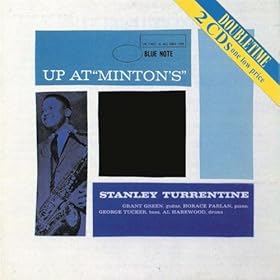
Stanley Turrentine - Up at Minton's

 Up At Minton's
 
Unlike most classic/ famous tenor sax players, I have over a dozen "setups," or mouthpiece and reed combinations; my mood changes so much, and so often (family history of mood disorders, you see) that I have a ton of different sounds I want to emulate at any given time; no one sound, is enough in and of itself.

I play tenor sax the most often (of the saxes, I mean) because to me it's the most expressive of the woodwinds; you can sound like an alto, a bari, or even a soprano if the mood strikes you; I would argue that this is not true with any of the other "primary" saxes.

Stanley Turrentine used a metal Otto Link mouthpiece (of which I have several-- you can see one in the above album cover), with a tight facing and a relatively-flexible reed; when I put a Rico 3 (soft), (or a D.C. Alexander Superial 3) on a New York Otto Link 5 (a facing  considered so narrow nowadays that I had to request it from a guy --arguably a "weirdo"-- in Texas), if I really wanna, I can sound something like an imitation of Mr. Turrentine-- who was not the most original of players, but I would say, one of the most placid and congenial: he knew what he wanted to play, and he did: easily, without any overt attempt to change the jazz world-- he was just playin,' baby.

Up at Minton's (1961) is Turrentine playing as a pretty young man (compared to, say, Turrentine favorites like Prayer Meetin' or Let It Go*).

It's a rough recording: table chatter, background noise, etc.-- i.e., it's great, daddy-O: just what they played... just how they played it....

"Later at Minton's" is the one of the most played songs on my iTunes (because it's in tenor F and is a long, great, easy, greasy blues), but still....

Opener "Broadway" bops along, as does "But Not For Me," "Stanley's Time" is a classic, as is "Yesterdays," or "Come Rain or Come Shine."

Just enjoy baby, this late- late-night live record.

--Horn

*Which BTW has a great album cover. I actually did publicity stills for a jazz album a few years ago, and gave the photographer this cover as a ideal visual template.

Friday, January 20, 2012

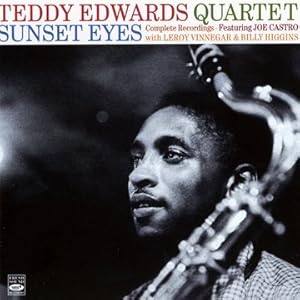
Teddy Edwards Quartet - Sunset Eyes Complete Recordings

 Teddy Edwards Quartet . Sunset Eyes. Complete Recordings


I play tenor sax ["Horn" is a metal AND jazz reference! Gettit?], and I like to study the whole sound of the instrument, no matter how seemingly abstruse. Were you studying tenor sax at Berklee or some shit, Teddy Edwards would only barely show up in the 400 or above sections... He's a footnote.

Don't get me wrong. He's very cool. I dig him. I mean, shit-- he's on this page, isn't he?

But. Still. If you listen to a lot of jazz, or play sax, or both, or whatever--

--you'll appreciate his approach. Similar to Gordon or Wardell Gray: definitely west coast jazz, but still, cooly different. And surprisingly distinct and fully formed from someone who's not that well known.

If you don't love getting very dorky/anal with your interpretations of tenor sounds sounds....

If you don't like to parse subtle differences in mouthpiece, reed and source of recording area....

If you are not pretentious as hell....

this review is probably not for you.

But you just dig swinging tunes and wanna rap about some old records-- Horn's here to help.

Ha-- alliteration. That sounds funny when you say it out loud. There's three "H" sounds.

What... were we talking about...?

Right! The review!

The newest version of Teddy Edwards' Sunset Eyes is actually two albums combined: the original Sunset Eyes, as released, and then, from the same session but at the time deemed unreleasable, Teddy's Ready.

They're west coast hard bop-- "cool bop?" Recorded in Hollywood between 1958 and 1960.

Specific track analness:

Consists of several other sessions actually, not mere the two shown above; two CDs, each with 13 tracks.

What amounts to the west coast  hard bop scene culminates in Edwards' (and band's) style: it's aggressive without being bitter, roaring without posturing. It's a natural athleticism coming across in energy and enthusiasm, seemingly untainted by pessimism (unlike, I would argue, East Coast hard bop is/was).

It's consistently clever and fun to listen to: they find new, often impish ways around old chord changes; they play with the enthusiasm of new, young players, but with all the empathy and innovation of the seasoned musicians they are.

Usually when I hear albums this hard to find (in the internet age, anyway), there's usually a good reason. They're usually third-, fifth- or tenth tier artists justifiably.

But here, listening to these guys jam, I feel amazed that they were passed over for the most part by jazz history. They're really quite good, and distinct from other players, even today. I don't get why I've been playing tenor for years, but only recently heard Edwards' name.

It reminds me, though to a greater degree, of Hank Mobley's situation. Even their tenor tone is similar: Edwards uses what is probably a Brilhart Ebolin mouthpiece with a moderately-heavy reed to get a Mobley-esque sound (i.e., "round," i.e., not having any particular aspect of the tone stand out-- no high highs, no fat lows in particular): and from there projects an inventive lyricism with a more hefty projection and speed than Mobley, who is to me more laid back in his execution.

CD 2 includes a sweet take of "Take the A Train," the Strayhorn standard, and "Higgins' Hideaway" has a very cool upward slide at 0:58 and again at 1:28.

They're all fun tracks. Pick anything with "Blues" in the title and you'll probably do well.

--Horn


Teddy Edwards 6tet - Afraid Of Love - Jazz Scene... by Delta_Mike

Thursday, November 17, 2011

Old & New Dreams - S/T

In the never ending battle between time and money, I will take time every time. I will also take content over technology. Even though I lost my job a few months ago and money is tight, having extra time to get re-acquainted with old gems on my LP shelves has been very rewarding. The self titled 1979 album from a band of Ornette Coleman alumni called Old And New Dreams has always been a favorite of mine but it was unplayed for many years. Now with the luxury of time on my hands it's back spinning on my turntable on a more consistent basis.

Ornette Coleman's music is a mystery to most and just plain unappealing to some. What no one will deny is that Ornette has played with some of the greatest and most creative musicians who have ever lived. In the mid-70's, as Ornette moved into using electric instruments, some of his best players put together Old And New Dreams to play his acoustic compositions as well as their own. Don Cherry (trumpet), Charlie Haden (bass) and Ed Blackwell (drums) were his key collaborators in the 1950's and Dewey Redman (tenor sax) worked with him in the 1960's. What a band! All of these musicians were part of the so-called New Thing, or Free Jazz, but their roots all ran very deep. In addition to being great improvisers they're all each great composers. When you put that combination together, special things are bound to happen. Like this album.

The album opens with "Lonely Woman," one of Ornette's most famous and accessible songs and their version stays faithful to the original but may even surpass it. ECM Records, who released this album, is well know for immaculately clean recordings. Every instrument is beautifully recorded and reinforces the song's slow boil mysterioso. Charlie Haden's deep bass groove merged with the incredible drumming of Ed Blackwell drive Don Cherry and Dewey Redman to deliver fantastic solos. Blackwell's drumming is simply unbelievable on "Togo," his arrangement of a traditional Ghanese song. You like cowbell? You've never heard it like this before. Side one wraps up with Don Cherry's composition "Guinea," which starts off slow but ends up swinging.

Side two starts off with a great Ornette Coleman song titled "Open Or Close" that Ornette never got around to recording himself. I'm not sure when it was written but it's a classic example of harmolodics in action. Dewey Redman's contribution "Orbit Of La-Ba" has him playing snake charmer melodies on a musette and some more incredible African influenced drum breaks from Blackwell. Haden uses a bow on his bass to create incredible underwater sounds on his tune "Song For The Whales." It's too bad Jimi Hendrix never got to jam with Haden, the tones he produces on an acoustic instrument would have really flipped his lid.

Like a lot of great albums, this is sadly out of print but it should't be too difficult to track down a used copy. Playing this album again after all these years has really reinforced that the simple act of listening to great music can truly be one of life's great pleasures. The album was paid for years ago and the music still sounds like it's from the future.

--Woody

Thursday, October 20, 2011

Miles Davis - LIVE in Europe 1967: The Bootleg Series Vol. 1


Just when you think all the best stuff has been released, remastered, repackaged a zillion times, every now and then a surprise comes along that really blows the doors off everything. It’s happened a few times recently in the jazz world – a totally unknown Voice Of America radio broadcast of Thelonious Monk’s quartet featuring John Coltrane was issued by Blue Note in 2005. In that same year Verve discovered radio broadcasts of two full sets of the Coltrane Quartet in full flight in NYC from 1965. In 2007, Charles Mingus’ widow discovered and released an outstanding concert recorded in 1964 at Cornell Universtity of Mingus leading his incredible six piece band with Eric Dolphy. Miles Davis was a friend, collaborator and competitor with all of the above and somewhere he’s probably cracking up that this box set of recently discovered recordings from 1967 was even more anticipated than these other landmark discoveries.

In 1967 Miles Davis was leading one of the best, if not THE best, band in the entire world regardless of genre: Miles on trumpet, Wayne Shorter on tenor saxophone, Herbie Hancock on piano, bassist Ron Carter and drummer Tony Williams. Miles put this band together in late 1964 and by 1967 they had played many concerts together and recorded the classic albums E.S.P., Miles Smiles and Sorcerer. This box set contains an astounding FIVE complete concerts from their 1967 European tour, 3 audio and 2 on DVD. About half of the audio recordings have been floating around as bootlegs and the DVD was only previously available in a ridiculously overpriced 70 CD box set containing the complete Miles Davis discography.

I consider myself to be a pretty major Miles fanatic/collector and I’d never been exposed to any of this material before. Sony has put out a low priced single CD of highlights from the set but even on a tight budget, it was obvious which version I would be picking up. When it comes to the greats taking the cheap way out is never an option. If you go to Peter Luger’s Steakhouse you don’t order a sandwich because it’s cheaper. Gotta go big or don’t bother at all.

So how’s it sound? Just as incredible as you would hope. The audio source for all the concerts are directly from the tapes made at the broadcast centers of each of the cities and are very consistent. The band is completely ferocious and it’s great to hear how they change tempos and arrangements from night to night. The concerts all start off with very fast versions of “Agitation” from E.S.P. before flowing seamlessly into “Footprints” off of Miles Smiles. By 1967, Miles was playing his entire set as one long uninterrupted piece. He stopped making stage announcements at least a decade prior. Listening to these concerts it’s hard to understand what all the fuss was about. Who the hell wants to hear anyone talking when you’ve got these guys tearing up the bandstand? Ballads like “’Round Midnight,” “On Green Dolphin Street” and “I Fall In Love Too Easily” are alternated in the middle of the sets before the pace cranks up for smoking versions of “Gingerbread Boy” and “Riot.” The hard bop chestnut “No Blues” makes a few appearances, too.

The DVD is a total revelation. The two concerts (one from Sweden, the other from Germany) are short, only 30 minutes since they were part of a festival but are no less intense than the audio concerts from Paris, Antwerp and Copenhagen. Getting to actually see this band in the flesh (in black & white) is such a treat. Literally months after these concerts Miles stopped wearing the fancy Italian suits. It’s cool to see him one last time as ultimate dapper jazz player before he became a psychedelic warrior. Back then people described Miles as looking scary or pissed off on stage but it’s obvious he’s concentrating very hard on the music being played. He’s probably pissed off about something, too. It’s also great to see the other guys in the band shoot each other glances from time to time when the jams get a little wild. They’re loving it and it’s obvious none of it was planned ahead of time. Drummers, especially, will be thrilled at being able to study the very young Tony Williams absolutely murder his drum kit.

Miles is one of the few jazz artists that is also listened to by a lot of non-jazz music fans. If you’re new to him, the single disc from these concerts is a pretty good example of why he’s so respected. If you’re a fan of real music don’t hesitate to pick this muther up right away. Best thing I’ve heard this year for sure.

  --Woody

Monday, June 13, 2011

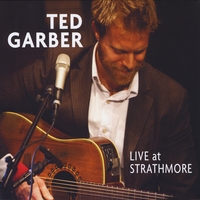
Ted Garber - Live at Strathmore

I’ve got the love/hate thing going on with today’s singer/songwriters. For me, it seems there’s a lot of something going on, but there’s really no substance. Almost like the soul has been sucked out of the songwriter. A lot of ego, a lot of faux sensitivity, a lot of rubbish. By today’s standards, it seems that a singer/songwriter simply needs to know how to or attempt to tap into their sensitive side. Ted Garber takes that standard and crushes it, bringing back the elements of the craft that have been forgotten . . . storytelling that contains vivid imagery, emotional conveyance, pure and honest integrity, and a touch of humor that reminds us that the guy singing is still human. Garber crafted a near perfect album with American Rail, capturing the soulful essence of each tale he told, and handing it over to the listener like a snapshot from every roadside haunt that he visited. Now, with Live at Strathmore, we get the opportunity to hear a brand new set of songs played by a group of world class musicians and the tales have never been more uplifting! 

The Strathmore music program is one of those great programs that can enhance a musician’s songwriting abilities, but I’d rather spend time focusing on the end result . . . the music of Ted Garber. When I heard the rumblings across cyber space that this live album was being crafted, I naturally figured it was going to be a live recording of select tracks from American Rail with a few hidden surprises. What I got was actually the opposite . . . a live recording of hidden surprises and a single re-interpretation of one of American Rail’s gems. Bold, Mr. Garber. Very bold.

Opening with “Sunshine In Your Heart”, we get re-introduced to the soulful, Americana groove that Garber captured on his first release. It’s a little blues-y, very upbeat, and packed with a positive message about cutting the crud from our lives. In classic (yes, classic . . . it’s his fingerprint on the music) Ted Garber fashion, the man crafts lyrics in a way that’s reminiscent of someone like Jim Croce. Clever and witty, never clichéd, and always thoughtful, the lyrics are the strength of the man’s songs. Add that soulful voice and artistic integrity, and listening to Garber croon, you’ll think you’ve known the man all of your life. It’s a real voice, not something mechanized, orchestrated, or produced . . . a voice with such gravity that you can’t help but be pulled closer to it, to understand where this soul actually comes from.  

“Plastic Bag” is the track that probably hits me the hardest on an emotional level. Introspective and powerful, Garber showcases that one doesn’t need a million notes and a million fancy words to convey a message. Stripped down and performed in a jazzier tone than most of his past material, “Plastic Bag” is the song I’ve been toting around of late as a constant reference that I gotta’ remember to check my own nasty baggage at the door if I want to live to my fullest, and I guess . . . you could say this review is a personal thanks to Ted Garber for arming me with yet another weapon on my war against self destruction. Yeah . . . it’s that strong of a tune. Don’t believe me? Buy the record.

For a good hour, Ted Garber entertains a sold out crowd with his fusion of soulful jazz meets blues-y troubadour songs, self described as BluesAmericanaRock. Who am I to disagree? “Achilles’ Heel”, “Sunshine In Fog”, and the heart-warming reinterpretation of “A Lot Like Me” (it’s deep . . . it’s in a fortune cookie) are prime examples of a singer/songwriter who has mastered that balance of tapping the vein of sensitivity without coming across as sappy and trite. Like Van Morrison or the aforementioned Jim Croce, Garber can write a hell of a love song and he sings these songs with a masculinity that gives them an immediacy and power that can’t be ignored. Plus, on this live edition, Garber’s between song banter is priceless and I found myself unapologetically laughing out loud.

“Third Time’s a Charm” features a duet with fellow Strathmore resident Chelsey Green and it’s one of those fun time, happy jazzy romantic songs that is so well crafted and performed that it’s an immediate attention getter. Garber and Green have a natural chemistry on this sultry groove, and the lyrics are so compelling that I find myself taking sides with both characters. Then the trumpet solo . . . sigh . . . it’s a thing of beauty, and by the songs final notes I want to jump to my feet and clap enthusiastically with those in attendance. And then . . . there’s “Don’t Want To Make A Baby, Baby”. Garber enlisted the aid of Philly rapper Jason Ager to pen this hip-hop tinged gem of a funky rocker. It’s an instant classic, filled with humorous and intelligent lyrics about getting down and doing the nasty. It would have been easy to write this one in a crass fashion, but hat’s off to Garber and Ager for injecting a level of class to the tune. Hell . . . the song is so funky that it makes me want to go out and practice my own technique!  

While the songs are naturally the focal point of this performance, Ted Garber’s easy going and fun natured charisma adds an element of familiarity to the recording. You may have just met him, but you’ll think you’ve known him your entire life, and by the end of the performance, you’ll simply love the guy. These tracks are an open door to the intricate weave that makes up the tapestry of the man . . . bright and colorful, full of life, rich in humor, and deep with wisdom. If you don’t find yourself laughing, (maybe even crying), clapping, and cheering along throughout this outstanding set of genre jumping music, then you’re simply dead inside. Live at Strathmore is a slice of true Americana that absolutely can’t be missed!

--Pope 

Tuesday, May 17, 2011

Robinson - England’s Bleeding


The bastard great grandson of Lord Burgess is England’s conscience. He attempts to prove it with his debut album “England’s Bleeding.”

I’m making somebody really rich
While he pays me peanuts
Well, ain’t it a bitch.
I’ve got to get out of here.

-  a verse from the track “Forget About It All.”

Andy Robinson, also known simply as “Robinson” expertly blends disparate musical styles - Klezmer, Folk, Jazz, Blues, Country, Alternative Rock - as he plays clarinet, saxophone, guitar, banjo, glockenspiel, accordion and percussion. Yet, what could have been a cacaphony of harmonies is a smooth and successful combination of melodies all for one purpose - to make you think about the human condition.

Always talk to strangers
Because they are always lonelier than you
Always talk to strangers
Because you never know when you’ll need a friend

- chorus form the track “Always Talk To Strangers.”

This son of a son of a son of a bastard knows what he wants and is not shy about telling us what it is.

Some people just want some money.
They believe it’s going to make them happy
I can understand but it’s not what I need,
What I need is much cheaper than this

I want a place by the sea with a record player
and an old beaten up guitar
with a pub down below
Just to stumble back home
and that’s all that I really want
and that’s all I thats all I really want

Some people just want a woman
And some kids just want a baby
They both bel;ieve that family’s the answer
But for me I want simplier than this

I want good clean fresh air and brand new cigarettes
A good pair of shoes and a comfortable bed
Girls come and go but this smile remains
and that’s all that I really want
and that’s all I thats all I really want

    - excerpt from the track “That’s All I Really Want.”

Robinson is the whole package.  He can play, arrange and write.  He is from coal mining stock and echos British working class indignation.  

Hip hip hooray for our new Governor
England’s joy is MacDonald’s big brother,
I don’t care for one or the other
In the pocket of America’s mother.
Our children are pregnant and drunk
Our fathers are useless scraps of junk
Johnny Rotten who sang without a key
Is nothing but a sold-out punk.

England’s bleeding now
England’s bleedng everywhere

    - excerpt from the track “England’s Bleeding.”

He writes folk songs like Bob Dylan.  A faint echo of “Stuck Inside of Mobile With the Memphis Blues Again” can be heard in Robinson’s track “Stuck In Town.”  Yet, his approach is never as raw as Dylan’s approach.  It is polished and it sparkles with Robinson’s emotive voice.  It is the perfect combination for love songs such as “Dance,” “In A Whisper,” “Little Ms. Darling” and the album’s poppy “First Time.”

We smoke cigarettes,
We drink in the park
We always go out after it gets dark
We drink until three
She’s smiling at me
With her red wine lips
And her sweet french kiss

Yeah, I’m so happy I can almost cry
I don’t want this feeling to fade, Oh no

Maybe this could be the first time
I felt love

- first verse and chorus from the track “First Time.”

For Robinson it is all about the message.  Whether the topic is a melancholy story about an on and off romance, such as the track “In A Whisper,” or a soul-searching exposition on life, such as the track “Happiness,”  Robinson’s choice of syntax and cadence are used as formidable weapons.

I want something else

Happiness should be caressed, not depressed by the sorrow

Fat cats rule
While us dogs drool
And we bark at each move they make

They think that we’re small
That we don’t care
But I can tell you that our eyes are more open than theirs

I want something else

Happiness should be caressed, not depressed by the sorrow

- excerpt from the track “Happiness.”

Robinson ends England’s Bleeding with an introspective look at what he hopes the future holds. “Someday, Somewhere.” is a sweet  ethereal nursery rhyme but is the least enjoyable song of the whole lot.  That may be by design.. Robinson rails against the present but ends it all with a hope for a better future.  

The album is music-based poetry with a message.  It is a viseral and formidable debut effort. It will make you think. Turn it on, turn it up and listen.


- Old School