As usual, the latest EP from instrumental post-metal (whatever that means!) pros, Pelican, exhibits a vast harmonic and rhythmic vocabulary - making lyrics unnecessary.
Anyone who knows me is aware that I love instrumental music. I'm always excited to hear what these guys put out. In the context of instrumental rock, I never really know what to expect from them, except for one thing, of course - a departure from the constricting pretentiousness of Shred. Needless to say, I was pleased to see that I had received the promo for Ataraxia/Taraxis (Southern Lord, TBR 4/10/2012).
Immediately, the record's title interested me.
The term ataraxia is associated with Epicurean philosophy, being representative of the "highest good" or prerogative of life - more specifically, the pursuit of pleasure through a mastery of the art of rational living. Epicurus (island of Samos, about 342 - 270 B.C.E.) was a pretty cool dude who lived on a commune that boasted a really nice garden. He preached to his followers that one could achieve happiness through a partnership of moderation of bodily activities/ pleasures and mental training. The latter is the most important, since it imparts upon the practitioner a command over everything else in the world. Well, listening to Pelican's music, which leads by this very example, I am directed to ponder this uncompromising, yet calculated, approach to life. Interesting time structures and huge, aurally auspicious harmonies dominate.
Past albums have been known to be geologically heavy, taking me on a journey through a sonic subduction zone only to erupt from the other side of the record, destroyed and scattered across my living room floor. These days, Pelican takes a different route, proving that instrumental rock doesn't have to be governed by trends or exalted expectations. Perhaps, despite all the garbage acts that perpetually circulate the airwaves (bringing modern popular music to an ebb tide of despair), Pelican has founded its own Garden of Epicurus, a sanctuary that promotes and upholds the art of rational listening.
"This is our first release built by making recordings in multiple studios (often not with one another) and compiling the results; an experiment which we think paid off quite nicely and gives some indication on possible working methods for the future," as stated on the bands website regarding the different approach taken for writing and recording Ataraxia/Taraxis.
I can appreciate the wide range of sounds and melodic themes explored, as Ataraxia/Taraxis is only an EP, pretty short in length and created by a fragmented band, no less. The sleepy opener illustrates a cleanly delivered melody that is juxtaposed atop an anxious and even slightly out-of-tune rhythm section - giving off a wavy vibe. In my imagination, this disharmonic tension is indicative of the struggle of Epicurus (or anyone) to find sanity in an otherwise insane and ever-changing world. This flawless use of texturing is exactly what I want to hear in music. So, with my ears glued to this sonic slate, I listen on in anticipation.
What ensues is classic Pelican. 'Loathe Biosas' starts off up-tempo and loud with an optimistic sounding riff that works itself out over the next several measures. The song then seamlessly shifts into a study of harmonic layering through arpeggio chord melodies, and harmonized bass parts. But, as Epicurus would've had it, they resolve the song after not too long. This is a catchy tune and it's available for streaming or download on Pelican's site. Check out the link below:
http://pelican.bandcamp.com/releases
'Parasite Colony' switches gears. It is slower, reallocating one form of intensity for another as it inflicts upon me a pensive and heavyhearted, minor feel. Hands down, though, my favorite track is the last one, 'Taraxis.' It resolves the tension brought on by the dissonant motif presented in the intro track. Instrument roles, however, have been switched. The electric guitar now whispers the gospel of sanity, driving the record home, as an acoustic guitar discordantly whines in the back seat.
Pelican breaks away from the preconceived mold into which instrumental rock has been cast, making this music a grand three dimensional venue for interpretation (as I've demonstrated), rather than just a big masturbatory guitar act centered around a few scales and a level of technical proficiency - ultimately two-dimensional. The compositional prowess allows for the creation of thick, lush soundscapes reminiscent of the organic timbre of other great bands like The Jesus Lizard and ISIS. Fads come and go, but great music lives on. As current acts like Russian Circles and Animals as Leaders continue to bore me nearly to death with their "music," I can have faith that Pelican will continue to keep me interested.
--Bones
Showing posts with label post metal. Show all posts
Sunday, April 15, 2012
Monday, March 19, 2012
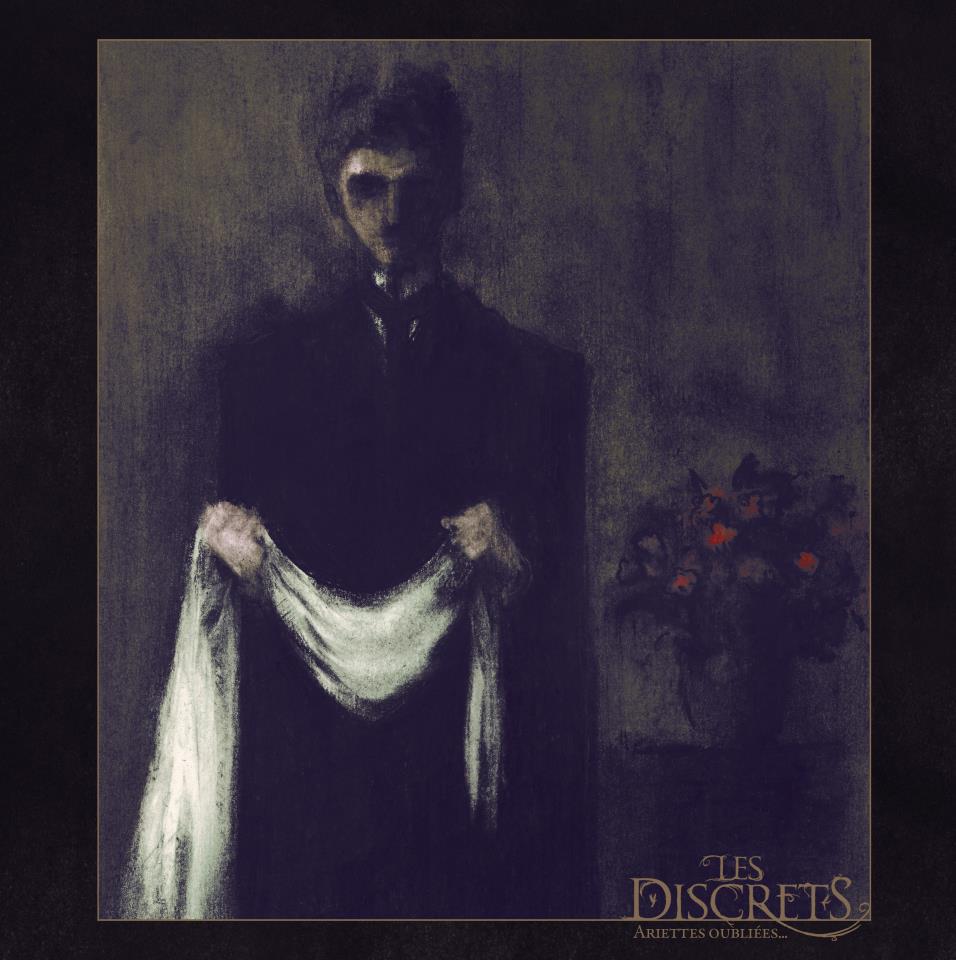
Les Discrets – Ariettes Oubliees . . .

I have no idea what to say about this album.
I think it’s brilliant. I think the soundscapes that Fursy Teyssier has created are wondrous and majestic. I think that the contributions of vocalist Audrey Hadorn are immaculate in their beauty. I think that the complexities of the musical movements are intriguing and dynamic. I think the tones are dark and foreboding. I think that Ariettes Oubliees . . . is a fantastic musical experience that begs for me to listen again and again, and at ever increasing volume. And, I think that I’m going a little mad trying to formulate a cohesive set of thoughts about this record!
The album opener is an instrumental track called “Linceul d'hiver” that is simply a beautiful, slow building mini epic. Teyssier does a great job of not rushing this song. It builds measure by measure, each measure adding a new musical element, filling all of the open space with sound, until we’re left with this densely intense wall of sound. Then, it vanishes and begins to fade away, only to drop immediately into “La Traversée” and then we, the listeners, are introduced to the dual vocal harmonies of Teyssier and Hadorn, each voice complimenting the other over a passage of strumming guitars, droning in a shoegazers fantastic voyage. Gloriously dynamic and epic, this song changes pace about three minutes in and gets a little darker, a little moodier, a little more distorted around the edges and heavier. Though the song ventures into some progressive territories, it always retains some beautiful melodies, both in the way of the haunting strains of the guitars notes and in the vocals. The song even flirts with a little heavy metal moment around the six minute mark as a well produced and captured guitar tone, distorted to the point it vibrates the teeth, but not so much that it rattles the head. The first ten-plus minutes of this album was enough for me to recognize that this was going to be a different experience than I had with the band’s first album, my beloved album of 2010, Septembre et Ses Dernières Pensées. A different experience, but maybe one that was more satisfying!
The beauty doesn’t end there. “Le Mouvement perpetual” is another 7 minute track that captures Teyssier and Hadorn feeding off each other in their elegant fashion. When I hear this song, I can almost picture the images from the album cover (vinyl edition . . . beautiful gatefold jacket . . . bonus poster . . . quality work) coming to life. Skeletal images dressed in their finest evening attire, elegantly dancing a discordant waltz across the parquet floors of a ballroom, draped in dark curtains, lit by the soft light of a meager amount of candles, and led by a dark and somewhat sinister band . . . the voices of Teyssier and Hadorn actually have a dancing quality to them, in the way they work together, breathe together . . . entwined in the rhythms of the music. Darkly romantic, almost gothic. What an amazingly emotional song!
The entire album does this . . . get’s the imagination flowing, tickling the emotions, and flooding the soul with music that moves. For over forty-two minutes, Les Discrets regale the listener this delicate sound that still has some heft to it. The pop-tinged “La nuit muette” features a huge vocal performance, layered voices that soar and never come back down. The acoustic guitar-based “Après l' Ombre”, also featured on the Prophecy Productions compilation album, Whom The Moon A Nightsong Sings, with all of its haunting tones and darkened chords, and tortured vocal melodies. “Les Regrets”, in all of its instrumental glory, with its ultra-somber, almost depressive air . . . Ariettes Oubliees is an amazing trip into the darkest recesses of the emotions and human psyche.
On the first listen, I was concerned that Ariettes Oubliees . . . wouldn’t match up or live up to my expectations based on my past experience with Septembre et Ses Dernières Pensées, and like all things new, it almost didn’t. But, I continued listening, working to separate my memories of the previous record from the sounds I was currently listening to, and I found an equally satisfying record. Top 10 Album of the Year? I can’t answer that, for the year is young and there are a lot of records coming out this year. But, I can say that I will probably be playing this disc, like I did the last one . . . in between every other release that comes out. Great work and highly recommended!
Pope
www.lesdiscrets.com
www.prophecyproductions.de
Friday, November 25, 2011
Sunn O))) - ØØ Void

Is that enough "insert symbol"-type symbols for ya? I know I'm all set.
Sunn O)))'s second album, ØØ Void, originally released in 2000, has been reissued...!
Quick, Robin-- to the review!
Track one, "Richard" is intestinal rumbling as a mantra, from the bowels of the Earth, using (cause it don't need no drums; in terms of drums, Sunn O))) ain't care!) what may or may not be a synthesizer as what effectively works as a "count," the way a drummer would use a ride symbol or hi-hat to most obviously count time... at around 8:00 a sitar or bagpipes enters, and not incongruously.
Track two, "NN O)))" (I said I was all set with the symbols!) is the most obvious use, as is the whole album really, of Sunn O)))'s modus operandi (which they expanded upon stylistically with later albums, adding textures, tones, timbres, all the Ts really-- whereas this is pretty much as stripped down and simple as heavy music gets):
The glory of SOUND (i.e., not specific notes) for its own sake: sound for its purely physical effects (and not intellectual ones, that might be concerned with, say, lyrical content or melody)--
--and with lots of space to think.
Music that breathes so slowly you might forget it's breathing-- like a blue whale that only needs 5-10 heartbeats a minute to maintain its bulk, that of the largest animal thought to have ever existed on the planet.... Yeah. That simile totally works.
Track three, "Rabbits' Revenge" (if their punctuation is deliberate, there are several members of the Lepus family taking vengeance, a scary thought) opens as a bass pulse under some guitar feedback's skin-- a massive, breathing (there's that adjective-sometime-gerund again) sonic organism... this track is like the constant bending of a cane reed into the correct pitch-- then made massively monolithic.
Alliteration free of charge. Horn's here to help. That second alliteration? Gratis as well!
Final track (and in my opeez the best), "Ra at Dusk," synesthesia-stically speaking, has a "monochrome" texture; one chugging guitar acts as the count here while another plays a simple recurring dirge-like ostinado... and again all the percussion instruments are effectively some type of guitar.
ØØ Void might be a great introdution to Sunn O))) if you're not familar with them-- there's no curveballs here. It makes Dopesmoker sound like Paganini. If you already like/ love them, then this one'll be easy to digest and will go down smooth.
Quick Robin-- to the Batgirl!
--Horn
Friday, September 24, 2010
Neurosis - Live at Roadburn 2007
I recently got a double burst of Neurosis dropped in my lap, a sensation not all that different than having a bowling dropped on your junk. But unlike the bowling ball incident, the Neurosis treatment was something that I enjoyed and wish would happen more often. Neurosis is a band that folks either love or just don’t get. I, for one, love them to death and quite frankly can’t be certain if I get them in the least. There’s just something about the primordial droning and hypnotic waves of distortion, the assault of sonic destruction that draws me to these guys like a woman to a shoe sale. The two albums that made their way into my possession and subsequent consciousness are the re-issue of the classic Enemy of the Sun (brilliant album in its original state, even better with the added tracks) and the more recent Live at Roadburn 2007. There’s nothing new that I could write about Enemy of the Sun, so I’ll just leave it as it’s a must have, therefore stop reading this and go get it before reading on. Live at Roadburn 2007, however, is new for me and something that I can’t stop listening to.
I figure that I have a few screws loose, I didn’t get the proper nurturing as a child, or I just don’t get enough sleep to make the extreme noise parade that Neurosis produces something I look forward to. It’s not the kind of music that I typically gravitate towards in that the music doesn’t have the ballsy guitar riffs or mighty mosh parts or variation of mood that makes me punch drunk. But, that’s not to say that this music is any less dynamic. In fact, the music that Neurosis creates is arguably more dynamic than the better half of modern music it’s just that these guys just do it with volume and tone. Filled with imposing phrases and dark words, the detuned, heavy music creates an element of dread and sorrow, hopelessness for the future on mankind, yet . . . I find it completely fascinating! Like when we’re driving and catch a glimpse of roadkill . . . no, we don’t think it’s beautiful, but we all take a long glance at the deceased if not for fascination then for the hope that we can distinguish the breed of critter. That sensation is about the closest analogy I can come up with for Neurosis.
Okay, on with the album. “A Season In The Sky” is a majestic, near ten minute epic of dread and despair. The bass line that creeps out of the fog sets the tone for this song right off the bat and one can easily get the sense that something ominous is upon us. As the vocals enter, the chills run up the spine and the mind races through the wild imagery that’s being strewn across our minds’ eye. This is one of those cases where a band doesn’t need to utilize thrashing drums and cutting guitars to be heavy. The subject matter, the performance, the vocal tones, the bass tones . . . all of it is done with such intensity that the heaviness is more of a matter of fact than studio trickery. It’s well over four minutes before the rest of the band chimes in to make their presence known, but when they do, they don’t pummel us into submission as one might expect, but rather compliment the tones that have already been set. In time, the detuned guitars take center stage and the overbearing weight of the Neurosis that we’ve come to misunderstand and love shine on.
“At the End of the Road” follows next and clocks in at about eight and a half minutes. This track opens with a pulsating drone and steady tom attack from the drummer, creating yet again, a sense of dread and impending doom. This is the Neurosis that I seem to like the best . . . a band that channels their primitive ancestors, communicating in a primordial sense, generating a dark tribal vibe. This intro always makes me feel like it should have been part of the Apocalypse Now soundtrack. I hear this song and I’m transported to the jungles of Vietnam . . . or Cambodia . . . or Laos, you pick, and I’m creeping through the dense foliage with only survival on my mind. Rain pours down periodically while shadows shift along my peripheral vision, always make me turn my head to catch a cleaner view of what’s out there and only finding more jungle . . . always knowing that I’m being watched . . . being hunted. Right around the 5:30 mark, the song opens up, finds a groove and we get that pummeling sensation that Neurosis mastered long, long ago. The bass notes come from various places on the neck of the instrument, the guitars carry the weight of ages, the drums like a heartbeat in a darkened room . . . deafening.
“Distill” is another gem on this album. There’s more groove to this song than most of the others during this particular performance. I love the chaotic burst that explodes as the vocals enter the mix. One guitar is creating a sustained droning tone while the second guitar emits flurries of distorted notes. Masterful! And then the whole thing collapses into ambiance. The guitars suddenly go clean and subtle arpeggios are plucked from the instruments . . . and then BOOM! Chaos ensues once again! When listening to Neurosis this is to be expected. You may want to hear the band go into a long, extended riff frenzy, but know that they’re not gonna’. Their always going to take their music in a direction that is so left of center that it almost feels like they have no direction. But that’s when we as listeners need to stop and rethink how we perceive music. The ambient portions of this song are flat out scary, the rocking portions are devastatingly heavy.
“Water Is Not Enough” is a classic. I’ve heard this song in my sleep for a million years, making me think that I’m must be related to this alien race of musicians in some way, shape or form. Brutally heavy and everything one would expect in association when the name Neurosis is mentioned. One of the band’s shorter tracks at almost six and a half minutes, “Water Is Not Enough” is darn near accessible. The riffs are condensed, but the textures that they create shift the brain fluid from one side of the head to the other, creating a dizzying effect. Slow and steady, hard and heavy, music Neurosis-style . . .
Most people won’t have the patience for a band like Neurosis because the music takes time to get the end of the tale. It’s almost like reading one of Stephen King’s 1,000 word epics, or any James Mischner novel, the story takes time to develop, always building upon itself, incorporating various levels of nuance, until we get to the very end and sit back breathless, thinking to ourselves, “Holy shit.” Live at Roadburn 2007 is a fabulous recording partially due to the bands ability to perform music from their catalog and still create the dynamic mood and tones almost effortlessly. I also like that the crowd noise is at a minimum on this recording. I don’t mind crowd noise on live efforts, especially when we get to hear them chant along with the songs a la Iron Maiden or Rush, but in the case of Neurosis, I like that the focus is purely on the band and their ability to pull off the performance in a live setting versus the relative safety of the studio. Live at Roadburn 2007 is a good starting point for anyone interested in learning more about the band and hearing what they’re all about. Beyond that, Enemy of the Sun is a can’t miss. - Pope
buy here: Live at Roadburn 2007
mp3: Live at Roadburn 2007
buy here: Live at Roadburn 2007
mp3: Live at Roadburn 2007
Subscribe to:
Posts (Atom)